Category: Science

A World-Class Fossil Dig, a One-of-a-Kind Community Event

Originally posted on DrexelNow.

In the course of a single day, more than a thousand residents and visitors to southern New Jersey will dig into – literally – the process of paleontology and discovery at Mantua Township’s Community Fossil Dig Day. They will have the opportunity to dig their own fossils and to learn from the Drexel University paleontologist and students who conduct globally significant scientific research at the site at the sold-out event on Sept. 27 – the third annual event and the biggest yet.

“Big” is nothing new for Kenneth Lacovara, PhD, the on-site paleontologist at the Mantua Township, N.J. Inversand fossil dig site. Lacovara, an associate professor in Drexel’s College of Arts and Sciences, made international headlines earlier this month with the announcement of the new supermassive dinosaur species Dreadnoughtus schrani that he and collaborators unearthed in Argentina between 2005 and 2009.

Closer to home, Lacovara and Drexel students are making equally exciting discoveries as they dig fossils year-round at Inversand.

“Dinosaur paleontology began in New Jersey,” Lacovara said. “The world’s first discovered dinosaur was in Haddonfield, N.J. and was studied at what is now the Academy of Natural Sciences of Drexel University.”

Mantua Township’s Inversand Quarry has been a fossil dig for generations of scientists continuously since 1926, when mining operations and paleontological research by Academy scientists both began there. Today, the Inversand quarry is the last remaining marl pit on the East Coast that remains an active mining operation for manganese greensand – continuously pumping water from what would otherwise be a lake, in the process keeping the fossil layer exposed and available for ongoing discovery.

“This is the best site for Cretaceous-age fossil exposures east of the Mississippi River,” Lacovara said. “Here we find exquisite fossils of marine animals that lived here when this was a shallow coastal environment, including mosasaurs, which were essentially giant marine Komodo dragons, sea turtles, crocodiles and more.”

Even more remarkable, in recent years Lacovara and Drexel students have been carefully documenting the evidence of a mass die-off of the animals that once lived here in pursuit of a provocative question: Is this fossil bonebed linked to the extinction that wiped out the dinosaurs 65 million years ago?

“We don’t know,” said Lacovara, “but that is the hypothesis that we are testing by examining the fossils, the sediments and the chemistry.” If this idea is validated by the evidence, which could take years, Lacovara noted, the Inversand Quarry could be a window into this pivotal moment in time like no other.

Community Fossil Dig Day

For the community, having such a rich fossil site within 20 minutes of Philadelphia and conveniently accessible behind a New Jersey shopping plaza is a rare and special opportunity. Mantua Township officials and the Inversand Company, which owns and operates the site, have teamed up with Lacovara to share the scientific discovery process with the community. The annual Community Fossil Dig Day began in October 2012 through this partnership.

Children and teens dig for fossils.
Attendees of all ages at the annual Community Fossil Dig Day have the opportunity to dig for their own fossils and often may take home what they find.

On Dig Day, attendees of all ages learn about the site’s history and scientific importance, then observe the live excavation area where Drexel students are unearthing scientifically significant, articulated vertebrate fossils such as sea turtles and marine reptiles and crocodiles. Next, attendees get to dig into the muddy, wet sand in their own designated digging areas. Attendees often find marine animal remains from 65 million years ago, including fossilized shark teeth, shark feces and clams – and in most cases they can take home what they find.

“I still have goosebumps thinking of what I saw there,” one resident wrote after the first Community Dig Day, which drew explorers from the local community and from as far as New York and Maryland. “Thank you for the experience of a lifetime.”

Following Lacovara’s recent Dreadnoughtus dinosaur announcement, the 2014 Dig Day on Sept. 27 will also feature a special celebration of Dreadnoughtus and the extraordinary excitement of a major dinosaur discovery made by South Jersey’s own on-site paleontologist at Inversand.

Also on hand to help on Saturday will be volunteers from the Delaware Valley Paleontological Society, the Delaware Valley Earth Science Society, Rowan College at Gloucester County, Rowan University and the University of Pennsylvania. Additionally, dozens of community volunteers will be on-site.

High Demand and Hope for Preservation

The popularity of Dig Day continues to grow, according to Michelle Bruner, Mantua Township Economic Development Coordinator, a primary organizer of the event. This year, the 1,000 registration spaces for the event were filled within two and a half days of opening. More than 400 are on the waiting list and will get priority registration next year.

“We’ve had over 5,000 guests in the three years of this event,” Bruner said. “The response has been overwhelming.”

In addition to the annual Community Dig Day, the Township and Lacovara offer educational opportunities for schools from across the region at Inversand, including hosting school field trips with hands-on science workshops led by Drexel students, as well as offering site tours for various civic organizations.

These types of educational opportunities are only the beginning. The team of partners behind Dig Day is working with other supporters in Gloucester County toward a long-term vision of preserving Inversand as a fossil heritage park in perpetuity. The Township has applied for funding through the New Jersey Green Acres program and continues to raise private donations toward acquiring the land for preservation and development of a fossil park and paleontological education center supporting STEM education.

– See more at: http://drexel.edu/now/archive/2014/September/Community-Fossil-Dig-Day-in-New-Jersey/
Dreadnoughtus schrani: Frequently Asked Questions on the Super-Massive Dinosaur

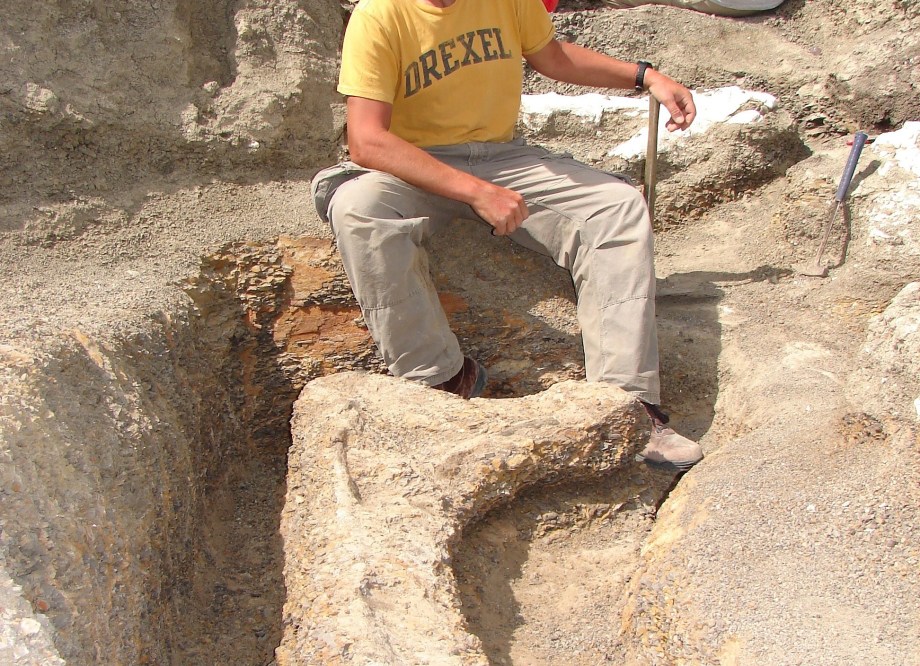
Drexel News Blog An artist’s rendering of the dinosaur Dreadnoughtus schrani in life. Dreadnoughtus had a 37-foot-long neck, 30-foot tail, and weighed an estimated 65 tons, making it the most massive land animal whose size can be accurately calculated. Credit: Jennifer Hall In a scientific … Continue reading Dreadnoughtus schrani: Frequently Asked Questions on the Super-Massive Dinosaur

Digging Deeper into Dreadnoughtus: Dinosaur Interview with Ken Lacovara

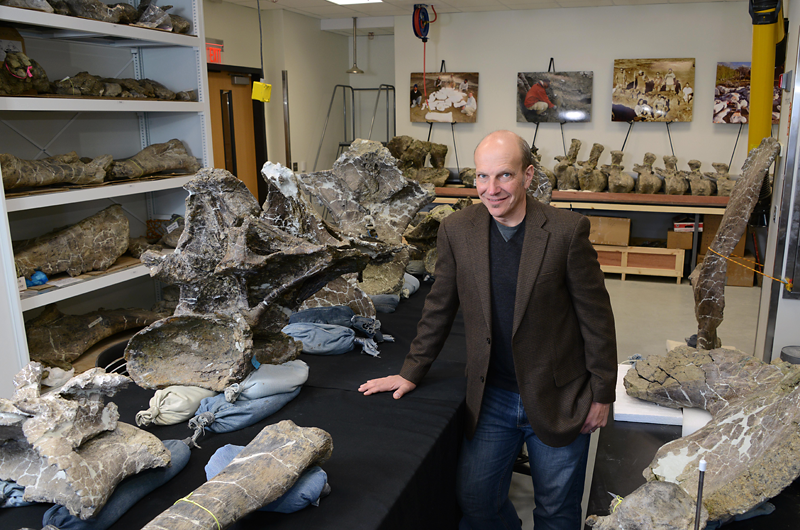
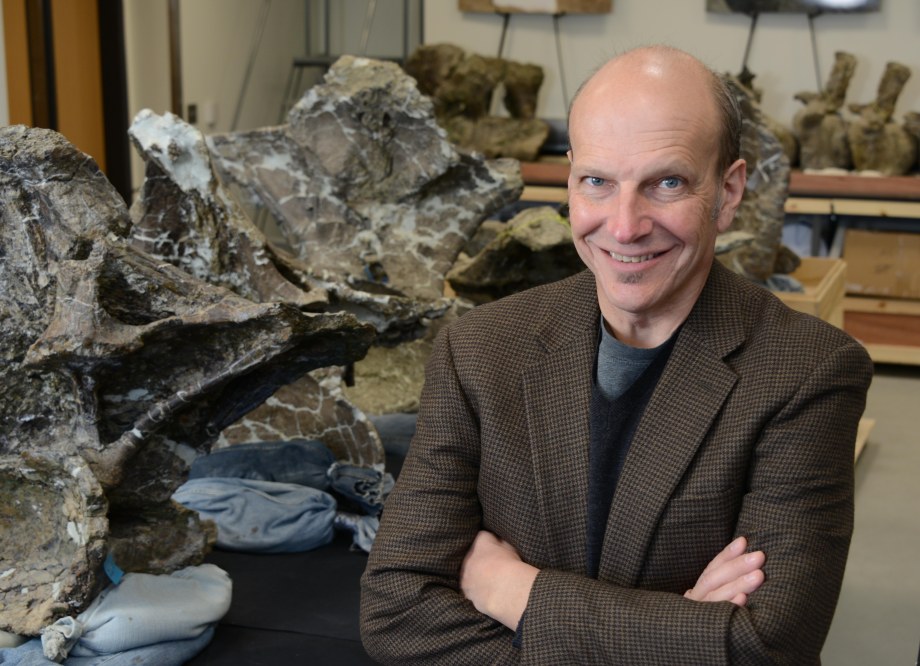
Drexel News Blog Kenneth Lacovara, PhD with Dreadnoughtus schrani fossils. A team led by Drexel University’s Kenneth Lacovara, PhD announced a major new dinosaur discovery with a paper published in the journal Scientific Reports on Sept. 4, 2014. The dinosaur is BIG. So big that … Continue reading Digging Deeper into Dreadnoughtus: Dinosaur Interview with Ken Lacovara

Drexel Team Unveils Dreadnoughtus: A Gigantic, Exceptionally Complete Sauropod Dinosaur

Originally posted on DrexelNow.

Scientists have discovered and described a new supermassive dinosaur species with the most complete skeleton ever found of its type. At 85 feet (26 m) long and weighing about 65 tons (59,300 kg) in life, Dreadnoughtus schrani is the largest land animal for which a body mass can be accurately calculated. Its skeleton is exceptionally complete, with over 70 percent of the bones, excluding the head, represented. Because all previously discovered supermassive dinosaurs are known only from relatively fragmentary remains, Dreadnoughtus offers an unprecedented window into the anatomy and biomechanics of the largest animals to ever walk the Earth.

Dreadnoughtus schrani was astoundingly huge,” said Kenneth Lacovara, PhD, an associate professor in Drexel University’s College of Arts and Sciences, who discovered the Dreadnoughtus fossil skeleton in southern Patagonia in Argentina and led the excavation and analysis. “It weighed as much as a dozen African elephants or more than seven T. rex. Shockingly, skeletal evidence shows that when this 65-ton specimen died, it was not yet full grown. It is by far the best example we have of any of the most giant creatures to ever walk the planet.”

Lacovara and colleagues published the detailed description of their discovery, defining the genus and species Dreadnoughtus schrani, in the journal Scientific Reports from the Nature Publishing Group today. The new dinosaur belongs to a group of large plant eaters known as titanosaurs. The fossil was unearthed over four field seasons from 2005 through 2009 by Lacovara and a team including Lucio M. Ibiricu, PhD, of the Centro Nacional Patagonico in Chubut, Argentina, Carnegie Museum of Natural History’s Matthew Lamanna, PhD, and Jason Poole of the Academy of Natural Sciences of Drexel University, as well as many current and former Drexel students and other collaborators.

Over 100 elements of the Dreadnoughtus skeleton are represented from the type specimen, including most of the vertebrae from the 30-foot-long tail, a neck vertebra with a diameter of over a yard, scapula, numerous ribs, toes, a claw, a small section of jaw and a single tooth, and, most notably for calculating the animal’s mass, nearly all the bones from both forelimbs and hindlimbs including a femur over 6 feet tall and a humerus. A smaller individual with a less-complete skeleton was also unearthed at the site.

The ‘gold standard’ for calculating the mass of quadrupeds (four-legged animals) is based on measurements taken from the femur (thigh bone) and humerus (upper arm bone). Because the Dreadnoughtus type specimen includes both these bones, its weight can be estimated with confidence. Prior to the description of the 65-ton Dreadnoughtus schrani specimen, another Patagonian giant, Elaltitan, held the title of dinosaur with the greatest calculable weight at 47 tons, based on a recent study.

Overall, the Dreadnoughtus schrani type specimen’s bones represent approximately 45.3 percent of the dinosaur’s total skeleton, or up to 70.4 percent of the types of bones in its body, excluding the skull bones. This is far more complete than all previously discovered giant titanosaurian dinosaurs.

“Titanosaurs are a remarkable group of dinosaurs, with species ranging from the weight of a cow to the weight of a sperm whale or more. But the biggest titanosaurs have remained a mystery, because, in almost all cases, their fossils are very incomplete,” said Matthew Lamanna.

For example, Argentinosaurus was of a comparable and perhaps greater mass than Dreadnoughtus, but is known from only a half dozen vertebrae in its mid-back, a shinbone and a few other fragmentary pieces; because the specimen lacks upper limb bones, there is no reliable method to calculate a definitive mass of Argentinosaurus. Futalognkosaurus was the most complete extremely massive titanosaur known prior to Dreadnoughtus, but that specimen lacks most limb bones, a tail and any part of its skull.

To better visualize the skeletal structure of Dreadnoughtus, Lacovara’s team digitally scanned all of the bones from both dinosaur specimens. They have made a “virtual mount” of the skeleton that is now publicly available for download from the paper’s open-access online supplement as a three-dimensional digital reconstruction.

“This has the advantage that it doesn’t take physical space,” Lacovara said. “These images can be ported around the world to other scientists and museums. The fidelity is perfect. It doesn’t decay over time like bones do in a collection.”

“Digital modeling is the wave of the future. It’s only going to become more common in paleontology, especially for studies of giant dinosaurs such as Dreadnoughtus, where a single bone can weigh hundreds of pounds,” said Lamanna.

The 3D laser scans of Dreadnoughtus show the deep, exquisitely preserved muscle attachment scars that can provide a wealth of information about the function and force of muscles that the animal had and where they attached to the skeleton – information that is lacking in many sauropods. Efforts to understand this dinosaur’s body structure, growth rate, and biomechanics are ongoing areas of research within Lacovara’s lab.

A Dinosaur that Feared Nothing

Illustration: Jennifer Hall

“With a body the size of a house, the weight of a herd of elephants, and a weaponized tail, Dreadnoughtus would have feared nothing,” Lacovara said. “That evokes to me a class of turn-of-the-last century battleships called the dreadnoughts, which were huge, thickly clad and virtually impervious.”

As a result, Lacovara chose the name “Dreadnoughtus,” meaning “fears nothing.” “I think it’s time the herbivores get their due for being the toughest creatures in an environment,” he said. The species name, “schrani,” was chosen in honor of American entrepreneur Adam Schran, who provided support for the research.

To grow as large as Dreadnoughtus, a dinosaur would have to eat massive quantities of plants. “Imagine a life-long obsession with eating,” Lacovara said, describing the potential lifestyle of Dreadnoughtus, which lived approximately 77 million years ago in a temperate forest at the southern tip of South America.

“Every day is about taking in enough calories to nourish this house-sized body. I imagine their day consists largely of standing in one place,” Lacovara said. “You have this 37-foot-long neck balanced by a 30-foot-long tail in the back. Without moving your legs, you have access to a giant feeding envelope of trees and fern leaves. You spend an hour or so clearing out this patch that has thousands of calories in it, and then you take three steps over to the right and spend the next hour clearing out that patch.”

An adult Dreadnoughtus was likely too large to fear any predators, but it would have still been a target for scavengers after dying of natural causes or environmental disasters. Lacovara’s team discovered a few teeth from theropods – smaller predatory and scavenging dinosaurs– among the Dreadnoughtus fossils. However, the completeness and articulated nature of the two skeletons are evidence that these individuals were buried in sediments rapidly before their bodies fully decomposed. Based on the sedimentary deposits at the site, Lacovara said “these two animals were buried quickly after a river flooded and broke through its natural levee, turning the ground into something like quicksand. The rapid and deep burial of the Dreadnoughtus schrani type specimen accounts for its extraordinary completeness. Its misfortune was our luck.”

Further Information and Resources

For a full suite of resources, including multimedia content available for use by the news media, please see the collection of links on the Dreadnoughtus Media Resource Page.

Link to paper (on and after Sept. 4, 2014): http://dx.doi.org/10.1038/srep06196

Primary collaborators on the study with Lacovara were Matthew C. Lamanna, PhD of the Carnegie Museum of Natural History in Pittsburgh and Lucio M. Ibiricu, PhD of the Centro Nacional Patagonico in Chubut, Argentina, who began working with Lacovara as an undergraduate volunteer during the Dreadnoughtus excavation and went on to earn his doctoral degree at Drexel University. Lamanna was first author on a recent paper describing the dinosaur Anzu wyliei, popularly known as the “chicken from Hell.”

Additional co-authors are: Jason C. Poole, Dinosaur Hall Coordinator at the Academy of Natural Sciences of Drexel University; Elena R. Schroeter, PhD, who recently earned her doctoral degree for her work on Dreadnoughtus in Lacovara’s lab at Drexel; Paul V. Ullmann, Kristyn K. Voegele and Zachary M. Boles, doctoral candidates in Lacovara’s lab at Drexel; Aja M. Carter, a 2014 Drexel Biology alumna who contributed to Dreadnoughtus preparation as an undergraduate; Emma K. Fowler, an undergraduate Drexel student; Victoria M. Egerton, PhD of the University of Manchester, who earned her doctoral degree in Lacovara’s lab; Alison E. Moyer, a 2008 Drexel alumna who was part of the Dreadnoughtus excavation in Argentina as an undergraduate and is now a doctoral candidate in paleontology at North Carolina State University; Christopher L. Coughenour, PhD, who earned his doctoral degree in Lacovara’s lab at Drexel and is now at the University of Pittsburgh, Johnstown, PA. campus; Jason P. Schein of the New Jersey State Museum; Jerald D. Harris, PhD, of Dixie State College in St. George, Utah; Ruben D. Martínez, PhD of the Universidad Nacional de la Patagonia San Juan Bosco in Chubut, Argentina; and Fernando E. Novas, PhD, of the Museo Argentino de Ciencias Naturales in Buenos Aires.

Lacovara, Lamanna and Poole were previously among the co-authors describing Paralititan stromeri, a large titanosaur which they excavated from the Egyptian Sahara.

Under Argentinian law, the Dreadnoughtus fossils are the property of the federal government in Argentina and are to be retained permanently in the province where they were discovered, Santa Cruz. The fossils were transported to Philadelphia and Pittsburgh in 2009 for scientific preparation and analysis under a research loan agreement. Fossil preparation and analysis occurred at Drexel University, the Academy of Natural Sciences of Drexel University and Carnegie Museum of Natural History. All Dreadnoughtus fossils are currently at Drexel University and will be returned to their permanent repository at the Museo Padre Molina in Rio Gallegos, Argentina, in 2015.

Funding sources for the study of Dreadnoughtus include the National Science Foundation (EAR Award 0603805 and three Graduate Research Fellowships [DGE Award 1002809]), the Jurassic Foundation, R. Seidel, Drexel University, The Academy of Natural Sciences of Drexel University, Carnegie Museum of Natural History, and supporting donor Adam Schran.

– See more at: http://drexel.edu/now/archive/2014/September/Dreadnoughtus-Dinosaur/

Roadside Research from the New Jersey Pinelands and Coast to Coast

Originally posted on DrexelNow.

“Roads are essentially the primary feature of human civilization at this point,” according to Dane Ward, a doctoral student in environmental science at Drexel University who is presenting research at the Ecological Society of America (ESA) meeting.

Perhaps not surprisingly, Ward, along with fellow doctoral students Ryan Rebozo and Kevin P.W. Smith from the Laboratory of Pinelands Research led by Walter Bien, PhD in Drexel’s College of Arts and Sciences, took advantage of a cross-country roadtrip from Philadelphia to the meeting in Sacramento this week for some extra ecological data collection.

“While traveling across the country and passing through different types of environments, we stopped every few hundred miles to evaluate the immediate roadside vegetation and comparing that to the plants in the natural environments 20 meters away from the road.”

Their cross-country look at roadside ecology is a new venture, but their scientific work closer to home in the New Jersey Pinelands also has a relationship to the road.

What Flower Prefers to Grow After You Mow?

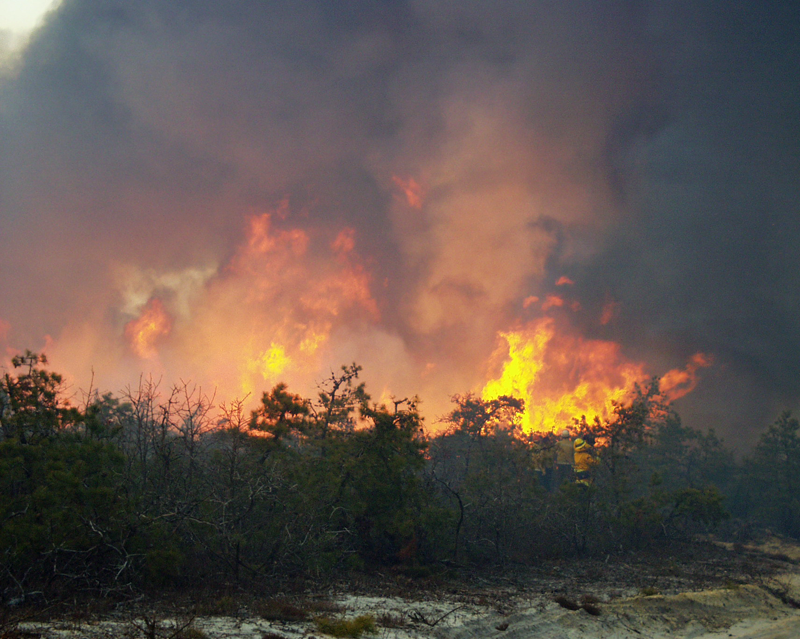
A prescribed burn at the Warren Grove Range in the New Jersey Pinelands. Credit: Walter Bien, PhD

A prescribed burn at the Warren Grove Range in the New Jersey Pinelands. Credit: Walter Bien, PhD

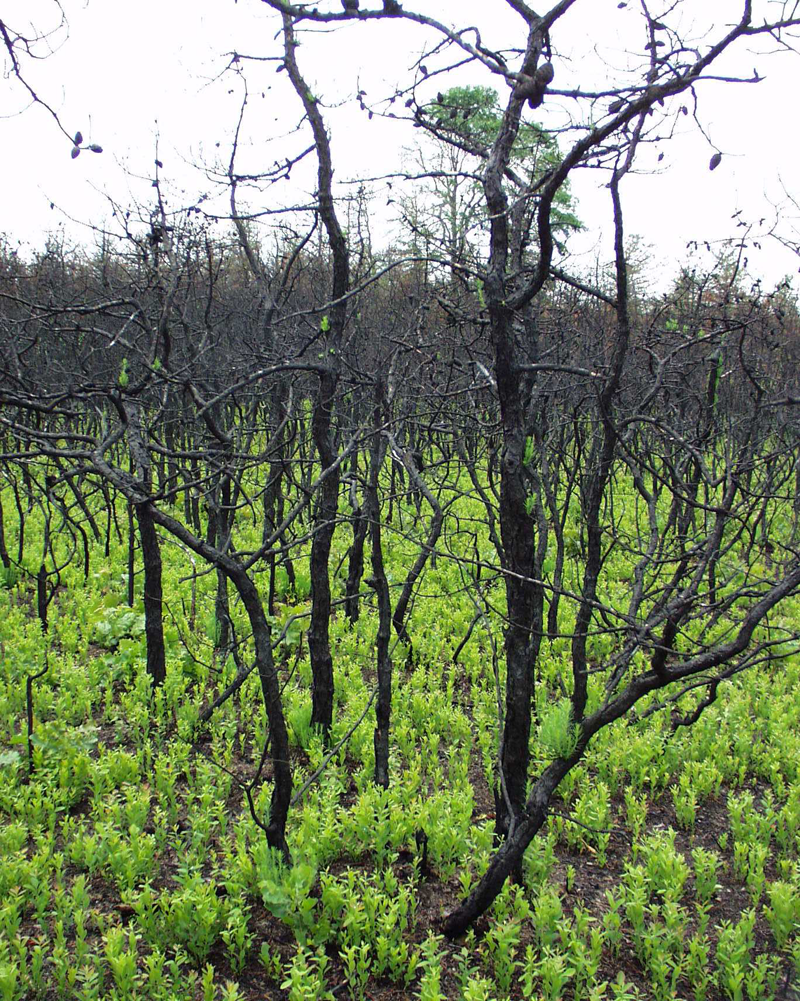
Shrub regrowth after a prescribed burn in the New Jersey Pinelands. Credit: Walter Bien, PhD

Shrub regrowth after a prescribed burn in the New Jersey Pinelands. Credit: Walter Bien, PhD

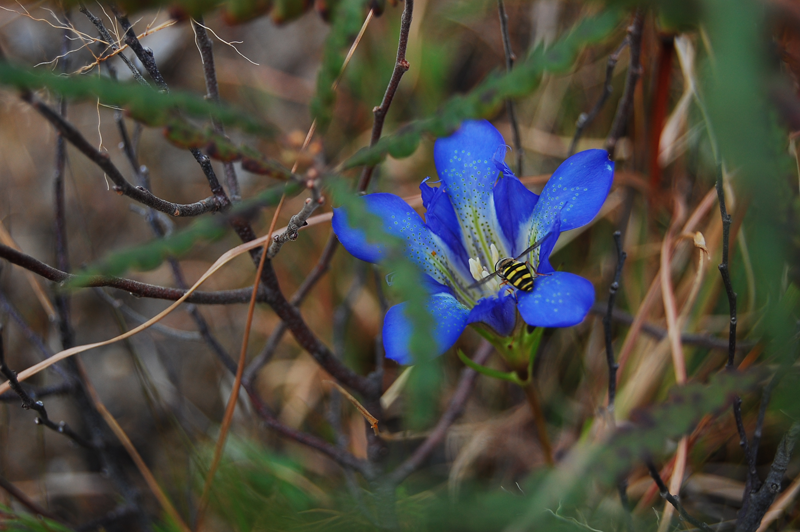
A syrphid fly visits the flower of a Pine Barrens gentian. Credit: Lee Ann Haaf

A syrphid fly visits the flower of a Pine Barrens gentian. Credit: Lee Ann Haaf

With their attractive purple and pink flowers, gentians are popular as cultivated garden plants.  The Pine Barrens gentian species (Gentiana autumnalis), thrives after its ecosystem has experienced disturbance, as one of the earliest species to begin re-inhabiting empty spaces – a phase known as early succession.But the gentian and other early successional species in the Pine Barrens are growing rare because of human intervention: suppressing wildfires, which are the most common natural disturbance in the area. The Pine Barrens of New Jersey are second only to California in the frequency of wildfires. Suppressing them protects human lives nearby, but means there are far fewer disturbed places where gentians prefer to grow.

Is mowing – including roadside mowing – an effective replacement for wildfires to help sustain the Pine Barrens gentian population? That is one of the questions Rebozo is addressing in research he will present at the Ecological Society of America meeting on Aug. 13.

Rebozo said that currently both mowing and prescribed burns are rarely used as management practices for successional species in the Pine Barrens. For his research, he worked with the New Jersey Air National Guard to implement prescribed burns for experimental purposes at the Warren Grove Range, where Drexel’s Laboratory of Pinelands Research conducts environmental research. Rebozo also identified sites where gentians grow unmanaged or mowed, including one mowed roadside site where gentians happened to grow.

Rebozo found that where mowing and burning disturbances were introduced, the gentians responded with increased plant density (more than doubled at some sites), flowering percentage and patch size – often within one year of the disturbance.

Prescribed burns had an even stronger positive impact on gentian growth and reproduction than mowing did.

“With a burn comes not only clearing of vegetation, but also an influx of nutrients,” Rebozo said. “The plants respond well to that in terms of flowering and the number of seeds they set the next year.”

When Snakes Meet the New Jersey Highway

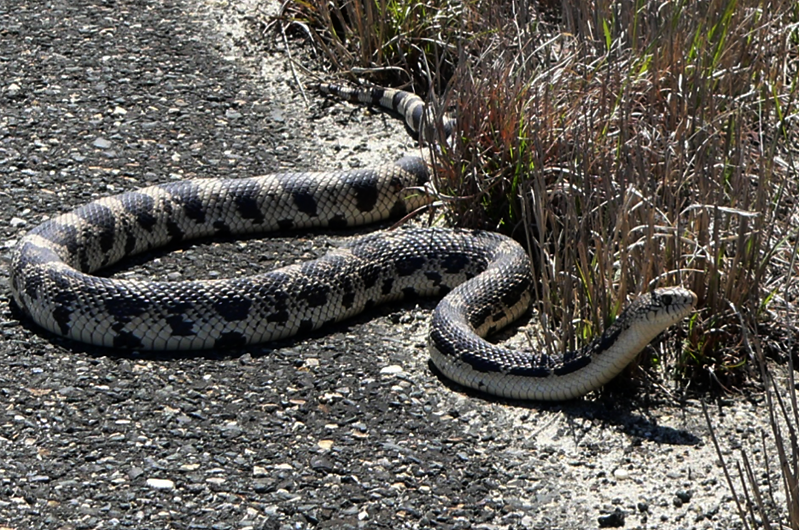
Roads are a challenge for northern pine snakes (Pituophis melanoleucus) in the New Jersey Pine Barrens, based on the findings that Ward will present at the ESA meeting on Aug. 15. At this meeting, Ward will also become chair of the student section of ESA, after serving as vice chair for the past year.

A map shows the population distribution of northern pine snakes in the eastern U.S. and in southern New Jersey.

A map shows the population distribution of northern pine snakes in the eastern U.S. and in southern New Jersey.

A map of the northern pine snake's habitat in southern New Jersey showing habitat fragmentation by roads. Red section is the Warren Grove Range (WGR) where Drexel's Laboratory of Pinelands Research performs most of its work. Credit: Dane Ward

A map of the northern pine snake’s habitat in southern New Jersey showing habitat fragmentation by roads. Red section is the Warren Grove Range (WGR) where Drexel’s Laboratory of Pinelands Research performs most of its work. Credit: Dane Ward

Ward has worked on both substrate experiments – testing how well snakes move across different types of road surfaces – and landscape-level analyses of how much snake-friendly habitat is actually available for pine snakes without requiring dangerous road-crossings. He has found that snakes move much faster, and with less sinuous movement, on sand compared to asphalt and concrete surfaces.“Then we used that knowledge and looked at the landscape,” Ward said.

In New Jersey, the most densely populated state in the country, the network of roads can dramatically shape the area of land that snake populations can occupy without facing significant risk of population loss during road crossings.

“Roads reduce the number of snakes we can have by creating more small patches of usable habitat, in many cases too small to support even a single pine snake,” Ward said.

Ward analyzed the road layout and habitat types in the pine snake’s historic range in New Jersey and identified a total of 3,872 habitat patches divided by roads and natural barriers. Of those, only 156 patches were of a large enough size to support a small population of 3-5 adult snakes.

Ward said this work has helped inform ongoing efforts in the state to mitigate the impact of roads and provide connectivity for snakes and other wildlife to cross them safely. Two years ago, the New Jersey Air National Guard agreed to participate in a pilot study to test the feasibility of using culverts to guide snakes under roads as part of a larger study of northern pine snakes at Warren Grove Gunnery Range.  The New Jersey State Department of Transportation installed culverts under portions of the Atlantic City Expressway last year.

Newborn Snakes Finding Their Path Through Life

“Most reptiles are great mapmakers,” said Smith, a doctoral student in Drexel’s Laboratory of Pinelands Research who will present research on northern pine snakes at the ESA meeting on Aug. 14. At the meeting, Smith is also serving as the student liaison to the education diversity council.

Adult snakes tend to have a good idea of where they are and what is around them, but neonates, or newborn snakes, don’t have those mental maps established when they first emerge from the nest. Smith is tracking neonate pine snakes to find out where they go and where they stay to get a deeper picture of the species’ habitat needs. He is supplementing that tracking with simple experiments to find out why snakes might go one way or another.

Smith’s tracking of neonate pine snakes over two years has shown that the young snakes stay fairly close to the nest in their first year – ranging from 30 to about 250 meters away – but use a wide range of habitat types. Smith’s study site offers a range of uplands, lowlands, transitional zones, swamps and cranberry bogs. Although pine snakes are considered an upland species, the neonates moved readily through lowlands and wetlands, as well as grassy areas.

Smith has also performed behavioral experiments with neonate snakes to test the hypothesis that their movements could be influenced by social factors.

“Sometimes more than one female pine snake will nest in a single burrow,” Smith said. “The neonates may then come out with some siblings and some non-siblings. Do they have preferences in whose scent trail they follow?”

Using a simple Y-shaped maze test, he is trying to find out if neonate snakes prefer to follow their siblings or unrelated neonates.

For information about earlier phases of the pine snake research that Smith, Ward and other members of the Bien lab at Drexel presented at ESA last year, see the Drexel News Blog post here.

– See more at: http://drexel.edu/now/archive/2014/August/Roadside-Research-Pinelands-Snakes/

Drexel Scientists Find Common Sweetener is a Safe Insecticide

Originally posted on DrexelNow.

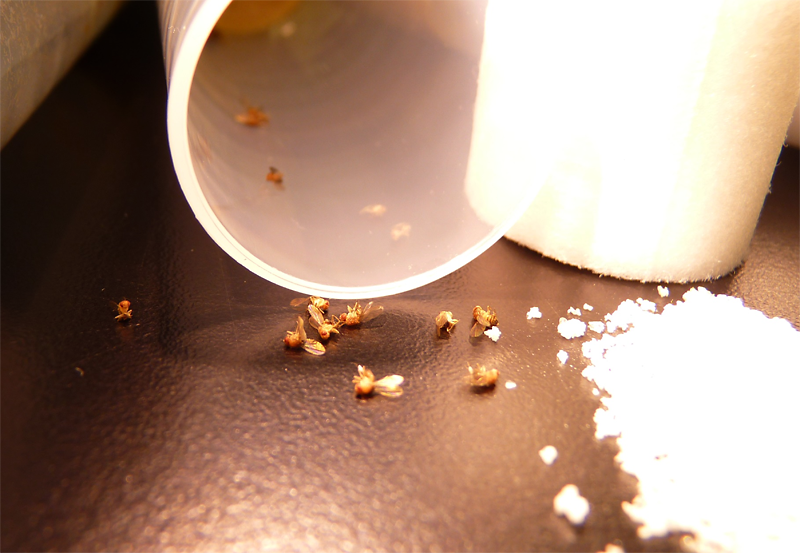
In a study that began as a sixth-grade science fair project, researchers at Drexel University have found that a popular non-nutritive sweetener, erythritol, may be an effective and human-safe insecticide.

Erythritol, the main component of the sweetener Truvia®, was toxic to Drosophila melanogaster fruit flies in a dose-dependent manner in the Drexel team’s study, published in PLOS ONE. The flies consumed erythritol when sugar was available and even seemed to prefer it. No other sweeteners tested had these toxic effects.

Based on this discovery, Drexel and the researchers are pursuing a patent on erythritol as an insecticide and are continuing to study its effectiveness. (more…)

STEM Teaching Innovation, Mentoring at Drexel to Expand with HHMI Grant for Improving Undergraduate Retention

Originally posted on DrexelNow.

Drexel University has been awarded funding from the Howard Hughes Medical Institute (HHMI) of $1.2 million over five years to implement strategies intended to increase the retention of undergraduate students in science, technology, engineering and math (STEM) majors. Drexel’s project is focused on the theme of developing communities that improve student learning and faculty use of teaching approaches that improve retention.

Drexel is one of only 37 institutions nationwide to receive the grant, out of 203 research universities invited to apply. HHMI issued this challenge for universities to develop effective strategies that will lead to significant and sustained persistence in science by all students, including those students who belong to groups underrepresented in science.

The programs address a significant point in the STEM education pipeline at which many students do not persist: The early years of undergraduate education. Sixty percent of all undergraduates who begin college intending to major in STEM subjects do not complete a bachelor’s degree in STEM – a number that rises to 80 percent among undergraduates from underrepresented racial and ethnic groups. Most of the attrition occurs in the first two years of college, when students are taking introductory courses in chemistry, math and biology.

The announcement of HHMI’s awards funding undergraduate STEM retention programs follows closely on the U.S. White House earlier this week announcing several initiatives to improve STEM education and mentoring for students in K-12 classrooms. Philadelphia was selected as one of seven cities that will engage in the US2020 mentoring program for youth in STEM.

In Drexel’s program, communities of incoming undergraduate STEM students will be formed in a freshman year course. The course will provide role models (upper level undergraduates and faculty) that will foster team building to support student academic and social success. This community development is intended to help students with their adjustment to college life, support their feeling of belonging within the Drexel community and help develop deeper intellectual connections for students within their intended STEM major. All of these factors are known to improve student retention. Drexel already requires all first-year students to participate in the UNIV-101 “Drexel Experience” course that places all students in a cohort of other students from their major – providing an ideal structure in which to establish the new mentored student learning communities.

Selected STEM faculty at Drexel will also engage in mentored learning communities, supporting their development as innovative educators who teach using tools known to be the most effective in supporting student learning.

“Teaching strategies that engage students in the classroom have been demonstrated to improve STEM student retention,” said Jennifer Stanford, PhD, an assistant professor of biology in the College of Arts and Sciences who is taking a leading role in implementing this project. “This includes approaches such as group problem solving, answering questions on course content with immediate feedback, case discussions or in-class debates.”

The program will provide additional support for faculty who are incorporating these approaches into their classrooms providing incentives, such as a yearly award that recognizes innovative teaching.

These strategies will impact students in all STEM disciplines and will engage STEM faculty and administrators across Drexel, in all colleges and schools where STEM majors are offered.

“It is our intention that these HHMI funded initiatives will be sustained long after the five-year award is finished,” said Donna Murasko, PhD, dean of the College of Arts and Sciences and principal investigator on Drexel’s HHMI grant. “We also intend to share our findings on STEM educational research with STEM educators across the region and nation. To accomplish this, Drexel will host a yearly symposium to bring together faculty and administrators from partner institutions to present outcomes from activities intended to improve STEM education.”

“We anticipate that this culture of mentored communities will become the hallmark of STEM disciplines within Drexel University, and will serve as a model for improving STEM education on other campuses,” Murasko said.

As part of this grant, Drexel will develop a Center for the Advancement of STEM Teaching and Learning (CASTL). CASTL will bring together faculty, administrators, students and staff from across Drexel’s campus to collaborate on projects focused on improving STEM education. Such projects will include providing training to faculty and students interested in learning how to teach STEM students more effectively and developing research projects to understand how to improve methods of teaching STEM students.

Additional Drexel faculty members were instrumental in developing this multidisciplinary project were: Daniel King, PhD, associate professor of chemistry in the College of Arts and Sciences and Aleister Saunders, PhD, associate professor of biology and associate dean of the College of Arts and Sciences.

Mark Greenberg, PhD, provost of the University, Joseph Hughes, PhD, dean of the College of Engineering and David Fenske, PhD, dean of the College of Computing and Informatics will serve with Murasko on the executive committee to oversee the implementation of the project.

Drexel is the only university in Philadelphia to receive this competitive grant from HHMI. Other recipients in Pennsylvania are Lehigh University and the University of Pittsburgh.

– See more at: http://drexel.edu/now/archive/2014/May/STEM-Major-Retention/