Author: Rachel Ewing

Young Adults on the Autism Spectrum Face Tough Prospects for Jobs and Independent Living

Dr. Paul Shattuck

Originally posted on DrexelNow.

For young adults with autism spectrum disorders (ASDs), making the transition from school to the first rites of independent adult life, including a first job and a home away from home, can be particularly challenging.

Two newly published studies show precisely how stark the situation is for finding success in employment and independent living among young adults on the autism spectrum, compared to their peers with other types of disabilities. The researchers emphasize the need to strengthen services to help adolescents and young adults and their families with transition planning.

“Roughly 50,000 youth with autism will turn 18 years old this year,” said Dr. Paul T. Shattuck, an associate professor in the A.J. Drexel Autism Institute and Drexel University School of Public Health, who co-authored both studies. “So many of these young people have the potential to work and participate in their communities. Supporting this potential will benefit everyone – the person with autism, the family, employers and society.”

Employment Outlook: Just Over Half with ASDs Had Ever Worked for Pay

In the Journal of the American Academy of Child & Adolescent Psychiatry, Shattuck’s team reports that young adults with autism spectrum disorders have worse employment outcomes in the first few years after high school than do peers who have other types of disabilities.

“Not only was the employment rate low for young people with ASDs when compared with young adults with other disabilities, but pay for jobs — if they got them — was significantly lower compared to young adults with other types of disabilities,” said Anne M. Roux, senior research coordinator at the A.J. Drexel Autism Institute, who led the employment study as a member of Shattuck’s research team while both were at Washington University in St. Louis.

They report that just over half (53.4 percent) of the young adults on the autism spectrum they surveyed had ever worked for pay outside the home within the first eight years after leaving high school. Only about one in five (20.9 percent) young adults with ASDs worked full-time at a current or most-recent job. Average pay was $8.10 per hour.

Employment rates, full-time employment status and average pay were substantially higher for young adults with other disabilities, including learning disabilities, emotional disturbance and speech/language impairment, compared to young adults with ASDs. The employment gap widened even farther when adjusted for differences in functional skills and conversational ability.

“The news is mixed,” Roux said. “This study highlights the particular difficulty that youth with autism are having during the transition into adulthood, especially youth from poorer households who are more likely to be disengaged from the services needed to secure and maintain a job.

“At the same time, half of young adults with an ASD did become employed, including youth with more challenging levels of impairment. This finding gives us hope for what might be possible with more effective preparation for employment, transition practices and workplace supports.”

In an independent editorial in the same journal issue, Dr. Patricia Howlin of King’s College London and the University of Sydney, wrote, “if young adults with autism miss out on this rite of passage, they risk transition into a world of social exclusion, financial hardship and significantly decreased quality of life. On the positive side, there is evidence that specialized, supported employment programs can be very helpful in assisting young people into work and in improving quality of life and even cognitive performance.”

Residential Status: Young Adults with ASD Less Likely to Live Independently

In another study published this week in the journal Autism, members of Shattuck’s research team report that young adults on the autism spectrum are less likely to have ever lived independently after high school, than adults with other disabilities.

This paper suggests that the years following high school are markedly different for young adults with ASDs compared to other disability categories,” said Kristy A. Anderson, a doctoral student at the University of Wisconsin-Madison, who led the residential status study. “Notably, young adults on the autism spectrum have higher rates of coresidency in the parental home.”

Young adults on the autism spectrum were less likely to have ever lived independently since leaving high school, compared to their peers with other disabilities. More young adults with autism lived with their parents or guardians, and for longer periods of time, than did individuals with emotional disturbance, learning disability or intellectual disability. They also had the highest rates of living in a supervised living arrangement.

Young adults with an ASD also expe­rienced the highest rates of postsecondary residential continuity (79.1 percent).

“They are residing in the parental home at higher rates and longer time periods relative to peers with other disabilities, warranting family-based services in the years following high school exit,” Anderson said.

Despite the concurrent study on employment, the researchers found no association between having held a paying job and residential outcomes among young adults on the autism spectrum.

Long-Term Research Targets the Autism Services Cliff for Adolescents

The analyses of employment and residential status were both products of Shattuck’s widely recognized research program examining outcomes and service use among adolescents and young adults on the autism spectrum. The needs of this age group are largely under-represented in research, even as many individuals diagnosed in childhood face a decline in available social services after they age out of the educational system.

The project involves long-term follow-up study on the outcomes of a large, nationally representative sample of young adults (National Longitudinal Transition Study—2). All of the participants were initially enrolled while receiving special education services in school; they or their parents completed regular follow-up surveys for up to 10 years after the student had completed high school.

“Many families tell us it’s like driving off a cliff when their child with autism exits high school because there just aren’t many options once they enter adulthood,” Shattuck said. “Our work highlights the enormous challenges facing this vulnerable population and their families. Experimenting with innovative solutions that can help these youth is a top priority at the A.J. Drexel Autism Institute.”

– See more at: http://drexel.edu/now/archive/2013/September/Autism-Spectrum-Young-Adult-Transition-Studies/

“Don’t Wash Your Chicken” Video Vignettes Make Cooking Safer

Originally posted on DrexelNow.

“Don’t wash your chicken!” This dramatic exclamation punctuated with a sound of shattering glass punctuates each of four short video stories released by food safety researchers.

The sound signifies the shattering of the commonly held illusion that washing raw chicken prior to cooking is safe, or even prevents food-borne illness.

In fact, the opposite is true, according to food safety researcher Dr. Jennifer Quinlan, an associate professor at Drexel University, who helped develop the “Don’t Wash Your Chicken” campaign – available online at drexel.edu/dontwashyourchicken.

In each of the campaign’s mini-drama videos, a knowing family member – wife, granddaughter, daughter and mother – explains to a well-intentioned home cook that the common practice of rinsing raw poultry before cooking is actually unsafe. An animated “Germ-Vision” graphic then shows that washing chicken only risks splattering and spreading bacteria that then can cross-contaminate other foods and kitchen surfaces.

“You should assume that if you have chicken, you have either Salmonella or Campylobacter bacteria on it, if not both,” said Quinlan. These two bacteria, she noted, are the leading causes of food-borne illness. “If you wash it, you’re more likely to spray bacteria all over the kitchen and yourself.” Rinse water is not hot enough to kill bacteria anyway.

Quinlan, who is in the department of Nutrition Sciences in Drexel University’s College of Nursing and Health Professions, developed the campaign with graduate student Shauna Henley as an outgrowth of a USDA-funded research effort to identify and address unique food safety risks in racial and ethnic minority populations in the U.S. As they reported in the Journal of Food Protection, focus groups with consumers representing three different minority groups showed that washing raw poultry was a common unsafe practice in all the groups, with some minor cultural differences in the method of washing.

A subsequent larger survey showed the practice was common across the board. “It was slightly more in the minority population, but still an average of 90 percent of the population washes chicken,” Quinlan said.

When they found that few educational materials were available to inform people that washing raw chicken is unsafe, Quinlan and Henley worked with their collaborators at New Mexico State University’s Department of Media Productions to develop the “Don’t Wash Your Chicken” campaign.

Photonovellas developed for the Dont Wash Your Chicken Campaign

Photonovellas developed for the “Don’t Wash Your Chicken Campaign” were half-comic, half-photo illustrated stories of families cooking chicken at home.

They started developing stories as photo novellas – half-comic, half-photo illustrated stories, a popular format for health education materials in some minority groups. But the strengths of educational media development at New Mexico State University also included video production, so the researchers kept going and produced the stories as videos with professional actors as well. In accordance with the USDA goal of encouraging home cooking and healthy nutrition, they also developed guided recipes to accompany each story.

They used all different types of chicken for the recipes to convey that no raw poultry is safe for washing: Small pieces of cut-up chicken, chicken breasts without skin, chicken parts with skin on and whole chicken were each featured in a recipe and story. And they cast and wrote the dramas to represent multiple races and ethnicities, so almost any viewer could find them relatable.

Now the video mini-dramas, video recipe demonstrations and photo novellas with recipe cards are all available online.

Quinlan wants to spread the word about the website and the “Don’t Wash Your Chicken” message far and wide, but she expects it to be a slow conversion process before people change their behavior.

People are very attached to the idea of washing raw poultry, she noted, for a variety of reasons found in the focus group study: “Some think they’re cleaning off germs. Some just want to get slime off or feel like it’s dirty,” she said. “There are a range of reasons, including just feeling like they should do it – ‘It’s raw, I should clean it.’”

Learning that washing is actually a problem is an essential first step. Quinlan estimates that public readiness to stop washing chicken is “about where thermometer usage was about 15-20 years go.” At that time, she said, “nobody owned a thermometer or thought about using one to test doneness [of cooking meat]. Now people own a thermometer, and at least some use them.”

If the campaign is successful, one glass-shattering conversation at a time, more people should learn that it’s safest if you “don’t wash your chicken.”

For More Information

Don’t Wash Your Chicken website

Ask food safety experts on BarfBlog.com. Food safety experts are ready to respond to questions and comments about washing chicken if you leave a comment here.

Discussion of the response to the campaign on the Drexel News Blog

– See more at: http://drexel.edu/now/archive/2013/August/Dont-Wash-Your-Chicken-Food-Safety-Campaign/

Why can’t the snakes cross the road, secret lives of baby snakes and other New Jersey Pineland snake science

Drexel News Blog Why can’t the pine snakes cross the road? Hint: New Jersey traffic might have something to do with it. Drexel students will bring to light these and other findings about the plight, perils and peculiarities  of the Northern Pine Snake in several … Continue reading Why can’t the snakes cross the road, secret lives of baby snakes and other New Jersey Pineland snake science

From India, Japan and Syria, 19th Century Women Who Trekked to Philadelphia for Medical School

Drexel News Blog Three international students at the Woman’s Medical College of Pennsylvania in 1885: Dr. Anandibai Joshee, class of 1886, who was the first Indian woman to earn an MD; Japan’s Dr. Kei Okami, class of 1889, and Dr. Sabat Islambooly, class of 1890, … Continue reading From India, Japan and Syria, 19th Century Women Who Trekked to Philadelphia for Medical School

First Large Public Health Study of Medical Marijuana Use in Young Adults to Begin with NIH Grant

Dr. Stephen Lankenau

Originally posted on DrexelNow.

Drexel University has received a grant for a five-year study of medical marijuana and its impact on drug use and physical and psychological health among young adults in Los Angeles. It is the first large-scale NIH project funded to directly investigate medical marijuana use among young adults aged 18 to 26.

The study, “Medical Marijuana, Emerging Adults & Community: Connecting Health and Policy,” is being led by Dr. Stephen Lankenau, an associate professor in Drexel’s School of Public Health, who was awarded an R01 grant from the National Institutes of Health for $3.3 million over five years, beginning July 1. Ultimately, Lankenau hopes the study’s findings can guide medical marijuana policies at local, state and national levels to result in the most positive health outcomes for young adults and communities.

Lankenau aims to determine the impact of medical marijuana policies in Los Angeles on young adults’ physical and psychological health. A core focus is understanding the significance and influence of dispensaries – storefronts that sell medical marijuana – on health.

“Dispensaries are a relatively new and unusual institution, and they haven’t been studied much,” Lankenau said. One study hypothesis is that dispensaries, which often provide social support in addition to medical marijuana, may provide the basis for better physical and psychological outcomes for medical marijuana users, compared to non-medical users who purchase the drug on the black market.

The study emerged out of preliminary findings from an earlier NIH-funded project, which examined non-medical prescription drug use among high-risk young adults in two cities. Among Los Angeles participants, Lankenau observed key differences in patterns of drug use and health between those who had a physician recommendation for medical marijuana, and those who used marijuana without a recommendation.

Guided by these findings, his new study has three specific aims:

  1. Determine the basis for medical marijuana patient status and its impact on trajectories of physical and psychological health among emerging adults.
  2. Determine the impact of medical marijuana patient status on patterns of drug use among emerging adults, including intensity of marijuana use and misuse of alcohol, prescription drugs and illicit drugs.
  3. Describe the natural history of marijuana use in Los Angeles among medical marijuana patients and non-medical users.

“The young adults we recruit into this study represent an important group,” Lankenau said. This population will have many years of their lives ahead to experience the consequences, whether positive or negative, of policies that allow for medical marijuana use.

Young adult patients were not the norm when medical marijuana first became legal in California in 1996. At that time, most patients who qualified for a physician recommendation for the drug were older adults with chronic conditions or seeking palliative care, Lankenau said. But the list of health conditions eligible to receive a medical recommendation for marijuana in California has since grown to over 200, including conditions such as anxiety and insomnia. A growing number of younger people are receiving access to the drug with a medical recommendation.

California is one of 18 states, plus the District of Columbia, where medical use of marijuana is allowed under state law. Several other states have medical marijuana legislation pending, and two states have legalized non-medical use of marijuana.

Federal funding of medical marijuana research has been minimal to date likely because under federal law the drug remains a Schedule 1 controlled substance, a category that includes other drugs such as heroin, LSD and ecstasy. Lankenau noted that, as a result, most existing studies are smaller in scale, or involve secondary analysis of survey data without direct recruitment of medical marijuana-using populations.

Lankenau’s study will recruit 380 young medical marijuana patients and young non-medical marijuana users in natural settings and will use qualitative and quantitative methods. Lankenau and co-investigator Ellen Iverson at Children’s Hospital Los Angeles will enroll a diverse set of participants this fall and expect to complete baseline interviews and surveys by early 2014. Participants will then complete annual follow-up interviews for three years.

In addition to broadly characterizing the role medical and non-medical use of marijuana has in the lives of young adults, Lankenau is also interested in specific aspects of the relationship between drug policy, drug usage and health in this population. Some of the relevant issues include: how the “gateway” concept applies to young medical marijuana patients; the basis for medical marijuana recommendations among young adults in Los Angeles, including the role of criminal justice issues; and the influence of medical marijuana on patterns of use among young non-medical users, including the problem of drug diversion.

– See more at: http://drexel.edu/now/archive/2013/July/Medical-Marijuana-Public-Health-Study/

Medical Safety Innovation Gets a Boost from Systematic Analysis

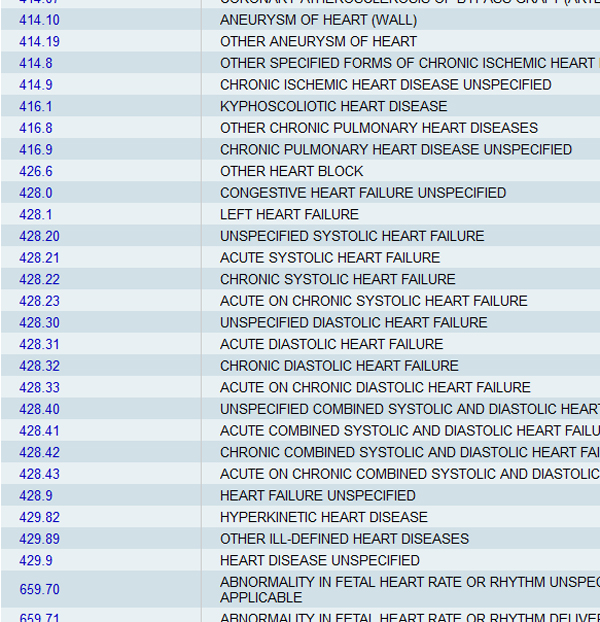
With large-scale analysis, ICD-9-CM codes such as these, used to indicate medical diagnoses in billing records, can point to patient safety improvement opportunities.

Originally posted on DrexelNow.

If all medical errors were counted together as a single cause, they would likely rank as the third leading cause of death in the United States. As health care personnel race to improve the quality of their care to save lives and prevent unneeded harm, a new study indicates there is more they can do to learn about what errors are occurring and why.

Researchers from the Drexel University School of Public Health demonstrated a systematic analysis of hospital administrative data for patient safety at a population level, in a recent paper in the Journal of Healthcare Risk Management. They say that health care organizations have an untapped opportunity to use their own administrative data in this way as a “springboard to problem identification” at the leading edge of preventing even those medical errors that are not yet preventable.

“For example, a patient may receive a drug in the Emergency Department and develop an allergic reaction, but did not have any known allergies at the time of treatment,” said Dr. Jennifer Taylor, an associate professor at Drexel who led the study. “While such events may not be deemed to be preventable now, we need to start tracking them so our research and development colleagues know what’s next in the prevention pipeline.”

Based on this premise, that preventing medical errors requires a good understanding of when and where all such errors, or so-called “patient safety events” occur – including those that are nonfatal, those that are not yet preventable and even those that do not cause noticeable harm – Taylor and colleagues analyzed large-scale data on hospital stays (recorded in discharge data) in Pennsylvania during one year. They compared hospital stays with and without patient safety events, to describe patterns, demographics and differences associated with such events.

They found that nine percent of the hospital discharges in Pennsylvania in 2006 were for stays with a patient safety event. On average, patients who experienced an adverse event were older, white and male; patient safety events added an average of $35,000 to the cost, and three days to the length, of a hospital stay.

“The percentage of discharges that had a patient safety event is in the range of other studies we’ve seen in the United States and around the world,” said Taylor. “While this figure may be a bit startling, it is not a cause for alarm, in that many of the events that we found are adverse events for which there are no known prevention strategies,” as in the example of the unexpected allergic reaction.

For their analysis, Taylor and co-authors used standard International Classification of Disease (ICD-9-CM) diagnosis codes that indicate each patient’s primary and secondary diagnoses and causes of injury in hospital discharge data. These discharge data are typically used for billing, but are also used for some public health surveillance efforts such as reporting on communicable disease. The ICD-9-CM codes provided a population-level picture of many preventable and non-preventable adverse events. The researchers combined this data source with an algorithmic patient safety indicator developed by the Agency for Healthcare Research and Quality (AHRQ), which has been demonstrated as a useful indicator of specific adverse events for which known prevention strategies are available.

Taylor and colleagues point out that hospital discharge data sources such as these are easily accessible to administrators and safety personnel and can be a useful source of information for patient safety. By describing patient safety events at the population level, their method capitalizes on the consistent standardized information the discharge data provide, and could be used by any health care entity across the United States and the world that utilizes the ICD system for coding.

Nationwide, patient safety efforts and innovations in health care are already accelerating due to financial implications of the Affordable Care Act, which limits reimbursement to facilities when specific known-preventable errors occur during a patient’s treatment. Improved population-level surveillance of all errors, Taylor suggested, can help guide safety innovators to take the next steps forward.

Taylor noted that some of Pennsylvania’s additional patient safety data sources make it a promising location to take the population-level analysis even deeper: “Pennsylvania has a strong commitment to patient safety and reporting,” said Taylor. “Many great data sources exist such as the Pennsylvania Health Care Cost Containment Commissioner’s state hospital discharge data and the Patient Safety Authority’s Patient Safety Reporting System. In our paper we recommend that these two systems be explored to discover how Pennsylvania can make even more advances in understanding the scope of the problem and how we should leverage our unique commitment to data into prevention opportunities.”

For patients concerned about preventing medical errors in their own care, Taylor recommends using the resources and fact sheets available from the National Patient Safety Foundation.

– See more at: http://drexel.edu/now/archive/2013/July/Medical-Error-Prevention-Population-Data/

How do you pack for a summer trip to the end of the Earth (for science)?

Drexel News Blog Scientists dig for fossils at Ellesmere Island in the Canadian Arctic. “Ice. Rock. Water. That’s what’s there,” Ted Daeschler said, discussing his upcoming field research expedition to Ellesmere Island in the Canadian Arctic. And that’s about all that’s there. No trees to … Continue reading How do you pack for a summer trip to the end of the Earth (for science)?

Study Measures Pleasure Response from Chocolate from Signals in the Eyes

Chocolate brownies were the food stimulus in Nasser’s study. (Photo by jeffreyw, CC-BY-2.0, via Wikimedia Commons)

Originally posted on DrexelNow.

The brain’s pleasure response to tasting food can be measured through the eyes using a common, low-cost ophthalmological tool, according to a study just published in the journal Obesity. If validated, this method could be useful for research and clinical applications in food addiction and obesity prevention.

Dr. Jennifer Nasser, an associate professor in the department of Nutrition Sciences in Drexel University’s College of Nursing and Health Professions, led the study testing the use of electroretinography (ERG) to indicate increases in the neurotransmitter dopamine in the retina.

Dopamine is associated with a variety of pleasure-related effects in the brain, including the expectation of reward. In the eye’s retina, dopamine is released when the optical nerve activates in response to light exposure.

Nasser and her colleagues found that electrical signals in the retina spiked high in response to a flash of light when a food stimulus (a small piece of chocolate brownie) was placed in participants’ mouths. The increase was as great as that seen when participants had received the stimulant drug methylphenidate to induce a strong dopamine response. These responses in the presence of food and drug stimuli were each significantly greater than the response to light when participants ingested a control substance, water.

“What makes this so exciting is that the eye’s dopamine system was considered separate from the rest of the brain’s dopamine system,” Nasser said. “So most people– and indeed many retinography experts told me this– would say that tasting a food that stimulates the brain’s dopamine system wouldn’t have an effect on the eye’s dopamine system.”

This study was a small-scale demonstration of the concept, with only nine participants. Most participants were overweight but none had eating disorders. All fasted for four hours before testing with the food stimulus.

If this technique is validated through additional and larger studies, Nasser said she and other researchers can use ERG for studies of food addiction and food science.

“My research takes a pharmacology approach to the brain’s response to food,” Nasser said. “Food is both a nutrient delivery system and a pleasure delivery system, and a ‘side effect’ is excess calories. I want to maximize the pleasure and nutritional value of food but minimize the side effects. We need more user-friendly tools to do that.”

The low cost and ease of performing electroretinography make it an appealing method, according to Nasser. The Medicare reimbursement cost for clinical use of ERG is about $150 per session, and each session generates 200 scans in just two minutes. Procedures to measure dopamine responses directly from the brain are more expensive and invasive. For example, PET scanning costs about $2,000 per session and takes more than an hour to generate a scan.

Nasser performed the study with colleagues at St. Luke’s-Roosevelt Hospital Center, New York Obesity Nutrition Research Center, in New York City.

– See more at: http://drexel.edu/now/archive/2013/June/Pleasure-Response-from-Chocolate-Measured-Through-Eyes/