Drexel Program Helping Violence Victims to Expand Across Philadelphia Hospitals

A memorial for victims who died in incidents of violence in Philadelphia. Photo: Tony Fischer, CC BY 2.0

Originally posted on DrexelNow.

As the epidemic of community violence swells in U.S. cities, one promising place for intervention and prevention of future violence is the emergency departments of hospitals. More than 25 hospitals nationwide have adopted a public health approach to helping victims of violence with programs that aim to prevent future violent injuries, not just treat them.

In Philadelphia, that public health approach is about to reach a much larger public: Healing Hurt People, a trauma-informed hospital-based violence intervention program developed at Drexel University, is expanding its reach at an unprecedented city-wide level. Efforts are underway to offer the program soon at Temple University Hospital in North Philadelphia, with further expansion planned for Einstein Medical Center Philadelphia and the Hospital of the University of Pennsylvania later in 2015-2016. The program currently operates in partnership with the emergency departments of Hahnemann University Hospital and St. Christopher’s Hospital for Children.

“No other city has expanded hospital-based violence intervention in this way,” said Ted Corbin, MD, an associate professor in Drexel’s College of Medicine and School of Public Health and director of Healing Hurt People. “What’s especially valuable about Healing Hurt People is that our approach to violence intervention is trauma-informed, meaning the program is built on principles recognizing how traumatic stress and past exposure to violence affect clients and their needs.”

Healing Hurt People, a program of Drexel’s Center for Nonviolence and Social Justice in the School of Public Health and College of Medicine, has previously been replicated at two hospitals in Chicago and one in Portland, Oregon, with a second Portland site under development.

“Research has shown that more than 60 percent of young people who are victims of violence show symptoms of PTSD at a diagnosable level after their injuries, and many more experience symptoms of hyperarousal,” said John A. Rich, MD, a professor in Drexel’s School of Public Health and co-director of the Center for Nonviolence and Social Justice. “We see that people who live with chronic traumatic stress in an unsafe environment are more likely to seek safety by resorting to carrying a weapon and in some cases retaliating, or to self-medicate with drugs—all behaviors that put them at continued risk and perpetuate the cycle of violence.”

Intervention programs like Healing Hurt People offer services to victims at a critical moment when their thoughts may turn to retaliation or to changing their lives. The programs’ case management services and behavioral health interventions offer clients a personalized path to safety from future violence, including access to health care and education.

The emphasis on trauma-informed care in Healing Hurt People has engendered its support from Philadelphia’s Department of Behavioral Health and Intellectual disAbility Services (DBHIDS). The department provides funding for trauma specific behavioral health, case management and other components of Healing Hurt People at its existing Philadelphia sites; DBHIDS is now funding the expansion to other city hospitals. The department’s commissioner, Arthur Evans, PhD, has publicly stated a goal of making Philadelphia the most trauma-informed city in the nation.

“We think Healing Hurt People is a terrific model,” said Evans, “and represents a tremendous opportunity to engage people in care without those individuals having to reach out for the crucial services they need. We’re very pleased that HHP is expanding its reach to help more young people in Philadelphia.”

In the program expansion process already underway, Drexel’s Healing Hurt People program staff are currently working with academic and health-care partners at Temple, including training and hiring staff and initiating enrollment in a rigorous research program to evaluate the program’s effectiveness. Hospital and affiliated academic leaders of the Healing Hurt People sites from Drexel, Temple, Einstein and Penn have already formed a “learning community” so they can share the process of planning and implementing Healing Hurt People across the city.

The research program to evaluate Healing Hurt People during its expansion across Philadelphia is funded by the Annie E. Casey Foundation and the Stoneleigh Foundation and aims to measure the effectiveness of the program’s trauma-informed services on clients’ mental health outcomes. Previous research studies on the effectiveness of hospital-based violence intervention programs, including a limited number of randomized controlled trials, have demonstrated their success in preventing violent reinjury and involvement with the criminal justice system, among other outcomes. A recent simulation study led by members of Drexel’s Center for Nonviolence and Social Justice also demonstrated that such programs are likely to save money, compared to nonintervention. However, the primary aim of these programs is typically not research, but service to clients to address critical community needs in violence prevention.

“Temple is no stranger to developing and maintaining programs that serve to reduce the incidence of gun fatalities in Philadelphia, and we are proud to be a part of this program,” said Marla Davis Bellamy, JD, co-principal investigator of the Healing Hurt People replication at Temple. “The expansion of Healing Hurt People to Temple University Hospital will provide our Emergency Department an opportunity to provide patients with behavioral health support to help them deal with traumatic stress given their overexposure to violence. The goal of this collaboration is to provide the residents of our surrounding neighborhoods with the tools necessary to prevent future violence as well as to improve the overall health of our community.” Kathleen Reeves, MD, is also a co-principal investigator of the Healing Hurt People replication at Temple.

– See more at: http://drexel.edu/now/archive/2015/February/Philadelphia-Hospital-Violence-Intervention/

A Natural Match: Drexel Research Team Connects Urban Design to Public Health

Originally posted on DrexelNow.

As inner-city school kids climb and swing at a state-of-the-art playground with a rain garden and trees, will their surroundings make a difference in their health and social well-being? At urban community gardens nearby, will the fresh produce and a greener view help local residents breathe easier?

Such questions, connecting urban design and natural systems with public health, are the focus of a new convergence of research and community engagement efforts at Drexel. A new team of faculty from the School of Public Health and Westphal College of Media Arts & Design is bringing together research on these interdisciplinary questions within community-based projects in West Philadelphia—some of which are already underway, and some that have yet to begin.

These efforts to study design and health will now be better linked and better equipped to succeed. In December, the American Institute of Architects (AIA) selected Drexel’s Urban Design & Health team as one of 11 inaugural members of the AIA Design & Health Research Consortium. The consortium will support member research on how design affects public health through workshops and discussion forums. It will provide members a platform to share ideas, such as resources for measuring and assessing the built or natural environment and results of related studies, with like-minded researchers and practitioners from across the country.

The Drexel researchers’ central hypothesis is that aspects of natural systems can be woven into existing urban systems to create healthier populations through design. The team is placing a special emphasis on measuring that idea in community settings in the Mantua neighborhood, where Drexel has already committed a number of efforts toward being the most civically engaged university in the nation.

The Drexel team’s research plan focuses on assessing the public health impact of design projects in neighborhoods near the University’s campus where community members face high rates of poverty and health disparities. These projects include:

  • A clean, sustainable and safe playground to be built at the Morton McMichael Elementary School in Mantua in summer 2015, including terraced gardens, trees and a rain garden to provide green space, shade and seating in addition to serving as an in-depth water management system.
  • Southwest Philadelphia Greenway, a 1.5 mile urban greenway built in 2013 in the center of a low-income, high-crime African-American area designed to connect residents to recreational facilities as well as provide a critical link in the larger regional and national trail networks that make up the “East Coast Greenway.”
  • Three community gardening initiatives developed in Mantua as part of a multiyear process aimed at creating long-term university-neighborhood partnerships that expand health and wellness opportunities in the community, including community gardens at Drexel’s Dornsife Center for Neighborhood Partnerships, where most of the harvested produce is donated to community members; at Backyard Beds, a project still under development, in which a group of Drexel students committed to urban farming and sustainability are building vegetable gardens in neighborhood residents’ backyards; and the Mantua Urban Peace Garden, managed by neighborhood residents along with Drexel and the Pennsylvania Horticultural Society, following a classic community garden model.
  • A proposed revitalization project for park at 34th and Brandywine Streets in Mantua. The team aims to collaboratively create a new vision for the park and invite residents to directly contribute to the park’s physical structure. The project will include community involvement in terms of art making, place making and design.

“There has been a growing collaborative effort between faculty in the School of Public Health and in Westphal College’s Department of Architecture & Interiors, including projects such as the Mantua Presbyterian Apartments, a low-income senior housing complex where Drexel students designed an urban garden, ” said Yvonne Michael, ScD, an associate professor in the School of Public Health and one of the principal investigators of the new team. “We saw the AIA consortium as an opportunity to better link the schools together. Now that we’ve been accepted as a consortium member, we are beginning to develop a framework for developing joint research and educational projects.”

The group aims to generate data that is useful to city residents and policy makers in understanding and addressing the causes of urban health problems and health inequalities—and to translate their new knowledge into effective practice and policy to promote health in communities. At the same time, they will train undergraduate and graduate students, as well as community members and external partners, in design and health issues.

“Working in an interdisciplinary capacity with Public Health faculty and students in the pre and post occupancy phases of the McMichael STEAM Schoolyard is just one of many future projects where we hope to better understand and quantify health impacts in the built environment,” said Debra Ruben, an associate professor and director of interior design programs in the Westphal College of Media Arts & Design. “Design and public health has always had a strong connection and the consortium is a perfect way to foster this type of collaboration, underscoring the important role that the built environment plays in the health and well-being of the community.”

Principal investigators on this team are, from the School of Public Health: Yvonne L. Michael, ScD,  Amy Auchincloss, PhD, Amy Carroll-Scott, PhD, and the school’s dean Ana Diez Roux, MD, PhD; and from the Westphal College of Media Arts & Design: Debra Ruben, Diana Nicholas, Jon P. Coddington, Harris Steinberg and Eugenia Victoria Ellis, PhD of the College of Engineering and Westphal College.

– See more at: http://drexel.edu/now/archive/2015/February/Urban-Health-Design-Research/

Children’s Hunger Born From Mothers’ Trauma

Originally posted on DrexelNow.

The roots of children’s hunger today may stretch back, in part, to the past childhood trauma of their caregivers. Evidence amassed over the past two decades has demonstrated that stress and deprivation during childhood have lifelong consequences on health, as well as school and job performance. A new small-scale study from Drexel University now suggests a strong relationship between exposure to adverse childhood experiences (ACEs) and household food insecurity among mothers of young children.

“This is brutal stuff,” said Mariana Chilton, PhD, an associate professor and director of the Center for Hunger-Free Communities in the Drexel University School of Public Health, who was lead author of the study now published in the journal Public Health Nutrition. “The causes and realities of hunger and poverty are complicated and difficult to unravel. We are seeing one component of them is that, for many people, experiences of hunger have trauma and adversity at their core.”

This Childhood Stress study, led by Chilton with several Drexel graduates in the School of Public Health, used both quantitative and qualitative methods to gather information about 31 Philadelphia mothers’ experience with deprivation, abuse, violence and neglect, as well as their experiences with hunger, education and employment and more.

The findings, Chilton and colleagues say, show that trauma and chronic stress are a largely overlooked part of the picture of why one in five American households with young children live with food insecurity. They say it indicates a greater need for public assistance programs to provide support for families’ emotional needs in addition to their material needs.

While the team’s quantitative surveys were small in number, the results still point clearly to a value in considering adverse childhood experiences as a contributor to food insecurity. Higher scores on the adverse childhood experiences survey, for instance, were significantly associated with the severity of participants’ household food insecurity.

In interviews, the study participants relayed their perceptions of how emotional and physical abuse in childhood affected their lives, including physical health, school performance and ability to maintain employment—all factors directly linked to household income and ability to afford enough healthy food for their own children.

“If a person always says you’re nothing; you’re nothing. Then for a while I used to think I’m not anything,” said 22-year-old Tamira (a pseudonym), a study participant who experienced abandonment by her mother at age five, then abuse and rape by members of her caregiver family at age six, and was emotionally and physically abused by her grandmother who took her in at the age of seven. Tamira experienced homelessness in her teens after her grandmother kicked her out, but eventually still graduated from high school. In her interview she described a connection between her childhood struggles with physical and emotional abuse and her ability to provide for her young daughter today: “So maybe that’s how I don’t have a job, because I’m thinking I’m nothing. I’m not ever going to have a job. I’m not going to be [anything], like my grandma said. […] Because I can’t find a job I cannot feed my daughter. How am I supposed to? I cannot buy her what she needs.”

Other study participants described experiences of physical neglect, household drug abuse, exposure to violence at home and in their communities and other adverse experiences in childhood. Many said they felt these experiences affected their lifelong abilities to succeed—although many simultaneously expressed strong feelings of resilience and hope to change the story for their own young children.

“This study has been difficult for us, because examining the relationship between food insecurity and adverse experiences in childhood may simply add more stigma to families already stigmatized and blamed for the hardships that they face,” said Molly Knowles, a Drexel MPH graduate, research coordinator at the center, and a co-author of the study. “It’s important to be clear that childhood adversity is one factor interrelated with many others, including low wages, insufficiently and inequitably funded education systems, racism and discrimination, lack of safe and affordable housing and an inadequate safety net.”

The researchers recommend that those working to address poverty and hunger in children should include emotional health of parents and caregivers in a more comprehensive approach to policy and services. Such an approach should include ensuring parents and caregivers have safe places to live, access to behavioral health support and opportunities to develop positive social relationships. They also recommend providing public assistance programs that recognize widespread exposure to trauma and violence, offering additional support to participants with behavioral health barriers to employment, and implementing programs in ways that avoid re-traumatization.

For more information about the study, see the following resources:

– See more at: http://drexel.edu/now/archive/2015/February/Child-Hunger-Trauma-Study/

Hospitals Helping Violence Victims Could Save Millions

Originally posted on DrexelNow.

At more than 25 hospitals across the U.S., health care professionals have embraced a public health approach to their work—taking action to prevent violent injuries, not just treat them. In programs known as hospital-based violence intervention programs (HVIPs), teams of medical professionals, social workers and researchers step in at a critical moment in a patient’s life—the period following a violent injury such as a gunshot or stab wound—with case management, counseling and other services that help these victims break free from the cycle of violence.

As these programs have grown, up from about six programs in 2009, reports of their successes have accrued. There is evidence that HVIPs prevent violent reinjury and perpetration, reduce aggressive behaviors and improve employment, education and healthcare utilization among program participants.

Researchers at Drexel University have now published the first study to systematically look at the economic outcomes of hospital-based violence intervention. They demonstrate that, in addition to transforming victims’ lives, these programs may indeed save a significant amount of money compared to non-intervention, in various sectors including health care and criminal justice. They report in the February issue of the American Journal of Preventive Medicine that an HVIP serving 90 clients could result in costs savings from tens of thousands of dollars and up to about $4 million in a five-year period.

“This is the first systematic economic evaluation of a hospital-based violence intervention program, and it’s done in a way that can be replicated as new evidence emerges about the programs’ impacts across different sectors,” said Jonathan Purtle, DrPH, an assistant professor at the Drexel University School of Public Health who was lead author of the simulation study.

Attaching dollars and cents to HVIPs—and knowing which sectors of society are likely to see the financial benefit—is important because many HVIPs lack a sustainable funding source. Most programs currently rely on a patchwork of funders that may include some use of insurance billing for eligible services, such as behavioral counseling; private foundation grant or institutional funding; or local government funding.

Demonstrating that HVIPs are a source of long-term cost savings for the health care system or for the criminal justice system, or both, helps make the case that investing in HVIPs pays off.

Purtle’s study drew on the research literature about violent reinjury, violent perpetration, and estimates of the rates at which HVIPs prevent these outcomes. He compared the costs of outcomes likely to be experienced by a hypothetical group of 90 individuals who received HVIP services (plus the costs of providing HVIP services to the 90 clients, $350,000 per year) to the costs of the outcomes likely to be experienced by a similar group of 90 individuals who did not receive HVIP services. Various models of the simulation included costs to the health care system, such as costs of treating the individuals who are reinjured and/or treating their victims if those individuals go on to perpetrate violence against others; those health care costs plus costs to the criminal justice system to prosecute and incarcerate individuals who become perpetrators; and the preceding costs in addition to societal costs of lost productivity.

In all models of the simulation, HVIPs produced cost savings over five years. The most conservative simulation, including only the future health care costs of those among the 90 individuals who may experience violent reinjury, showed health care savings of $82,765. The most comprehensive model, including lost productivity costs, showed a societal cost savings of over $4 million to serve 90 clients.

Purtle noted that lost productivity costs, while common in economic analyses, may be somewhat unrealistically high because they assume all individuals in the model are employed. Conversely, beyond the economic analysis there are still social benefits of HVIPs that aren’t easily quantifiable: “Even if the intervention cost a little more than it saved in dollars and cents to the health care system, there would still be a net benefit in terms of the violence it prevented,” Purtle said.

A Closer Look: Healing Hurt People in Philadelphia and the Benefits of Hospital-Based Violence Intervention

“The research literature has poetically referred to the time after a traumatic injury as the ‘golden hour’,” said Ted Corbin, MD, an associate professor in Drexel’s College of Medicine and School of Public Health, and a co-author of the study with Purtle. That first hour after a major injury is a medically critical time to address physical symptoms such as blood loss and brain injury.

Soon thereafter, Corbin said, is also a critical, vulnerable moment when patients who were victims of interpersonal violence may direct their thoughts toward retaliation, or toward turning their lives around.

Corbin directs Healing Hurt People, the hospital-based violence intervention program in Philadelphia, based in Drexel’s interdisciplinary Center for Nonviolence and Social Justice, of which he, Purtle and all of the study’s co-authors are part. Healing Hurt People serves a population of pediatric and young adult clients in two inner-city hospitals, who are largely marginalized, underresourced and socially disenfranchised. It operates based on a framework that is trauma-informed—meaning that the program is designed on principles recognizing how traumatic stress and adversity associated with past exposure to violence affect clients and their needs.

“Our efforts are to connect with that person, gain their trust and work to connect them with services,” Corbin said. The majority of patients approached by the program’s caseworkers, either during their time in the hospital or soon after, are interested in enrolling as clients. Many use the assistance of case managers to enroll in health insurance and connect to a primary care doctor for the first time as adults, get an ID card, connect with court advocacy and compensation services for victims, access school services or otherwise pursue positive changes in their lives to avoid future involvement with violence.

The Healing Hurt People program receives financial backing for trauma-informed case management services from the City of Philadelphia’s Department of Behavioral Health and Intellectual disAbility Services. Many of the behavioral health counseling services within the program are billed to insurance when appropriate.

“There are many aspects of society where people can take steps to address trauma and step in to contribute to reducing violence,” Corbin said. “Those of us in medicine have an opportunity to do something through hospital-based violence intervention, but it’s just one slice of the pie.”

– See more at: http://drexel.edu/now/archive/2015/January/Hospital-Violence-Intervention-Cost-Benefits/

Studies of Africa’s Most Endangered Chimpanzees Show Complex Evolutionary Past, Perilous Future

Photo credit: Paul Sesink Clee

Originally posted on DrexelNow.

In central Cameroon, two different subspecies of chimpanzees live on opposite banks of the Sanaga River, the only instance of two different chimp subspecies living in the wild in a single country. The area is roughly at the geographic center of the range for all four known subspecies of these great apes.

But when a team of scientists recently took a close look at the genetics of central Cameroon’s wild chimpanzees, they didn’t find two distinct populations; there were three.

“It blew away our assumptions,” said Matthew Mitchell, PhD, a postdoctoral fellow, at Drexel University. “We had always thought that the only genetic difference across populations would be between the two subspecies, and that the differences came from the division across the Sanaga River, but now we see there is more to the picture.” Mitchell was first author of two of three new papers about this chimpanzee research with his advisor Mary Katherine Gonder, PhD, an associate professor in Drexel’s College of Arts and Sciences, other lab members and an international team of collaborators, published this week in BMC Evolutionary Biology.

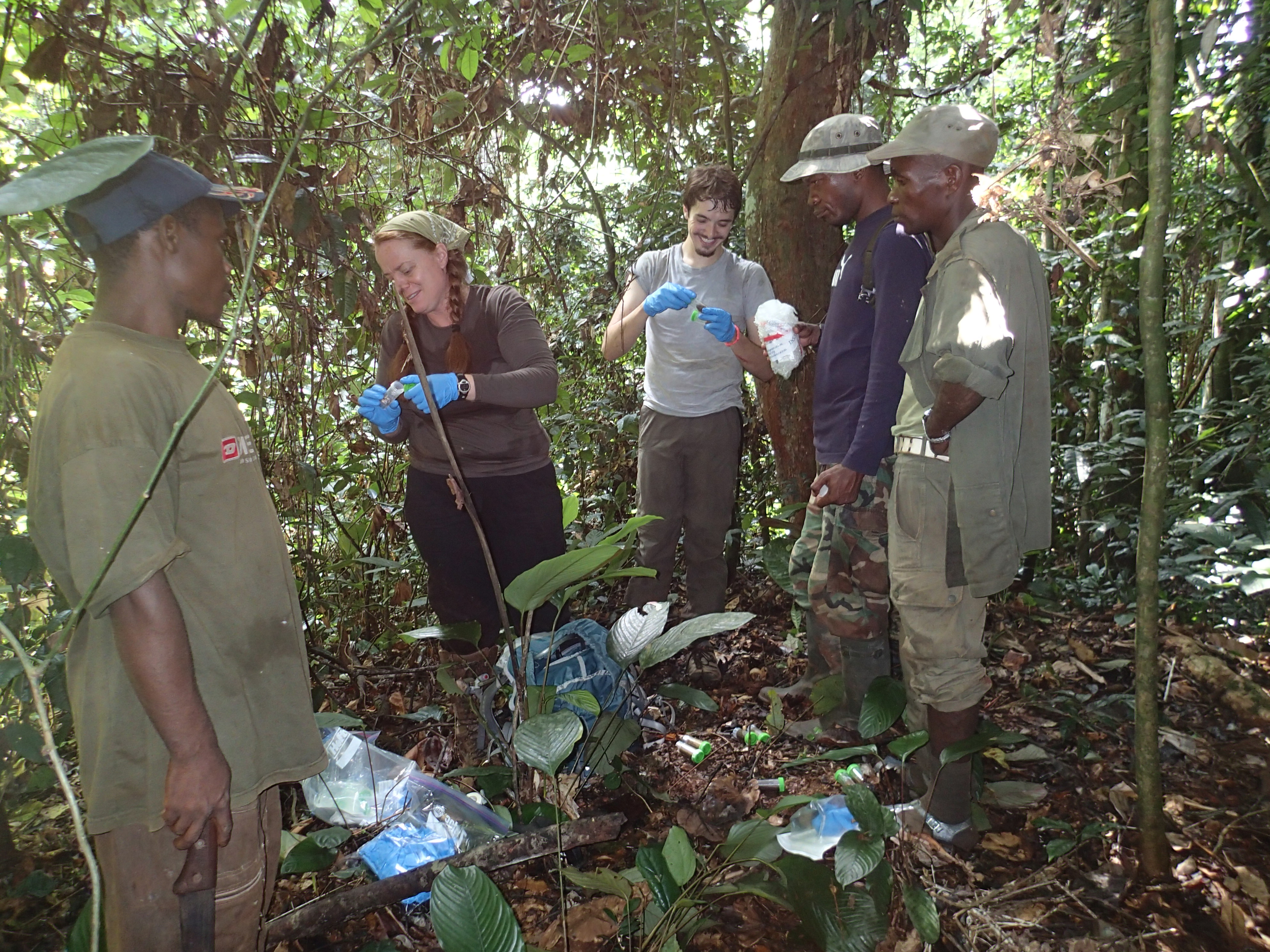
Mary Katherine Gonder and Paul Sesink Clee (at center of group) processing chimpanzee fecal samples for genetic analyses. Credit George Ghamu

The team’s complementary analyses of population genetics, geographical distribution and habitat use paint a new picture of the evolutionary past and potentially bleak future of the Nigeria-Cameroon Chimpanzee (Pan troglodytes ellioti), already the most endangered chimp subspecies, with about 6,000 individuals estimated in the wild. They are already threatened by illegal hunting and habitat loss to both logging and agricultural plantations.

Now, among other findings, the scientists report that the two distinct populations of the Nigeria-Cameroon chimpanzee have closer ties to their habitats than previously anticipated. And their findings also suggest climate change could cause significant  harm to chimpanzee populations due to habitat alterations.

The research team, one of the few groups studying Nigeria-Cameroon chimpanzees in the wild, collected fecal and hair samples for genetic analyses. They also mapped the precise locations of those sample collection sites in addition to locations of reports of chimp sightings and evidence of activity including nests and tools.

“The Nigeria-Cameroon chimpanzee is perhaps the least studied of all chimpanzee subspecies,” said Paul Sesink Clee, a doctoral candidate in Gonder’s lab, who was first author of a paper detailing habitat distribution and modeling impacts of climate change. “This is the first time that their distribution and habitat has been studied in such detail, and the data used to predict how their habitats might degrade under climate change.”

Where Distinct Ecosystems Meet, An Unexpectedly Different Population of Chimps Occurs

Central Cameroon is noteworthy not just as a place where two chimp subspecies meet. It’s also the place where the species-rich, mountainous Gulf of Guinea region abuts the distinct, but comparably diverse, lowland Congo River Basin. Together, these two ecosystems contain about 20 percent of all plant and animal species on the entire planet, and many of those species are endemic—found only here in central Africa.

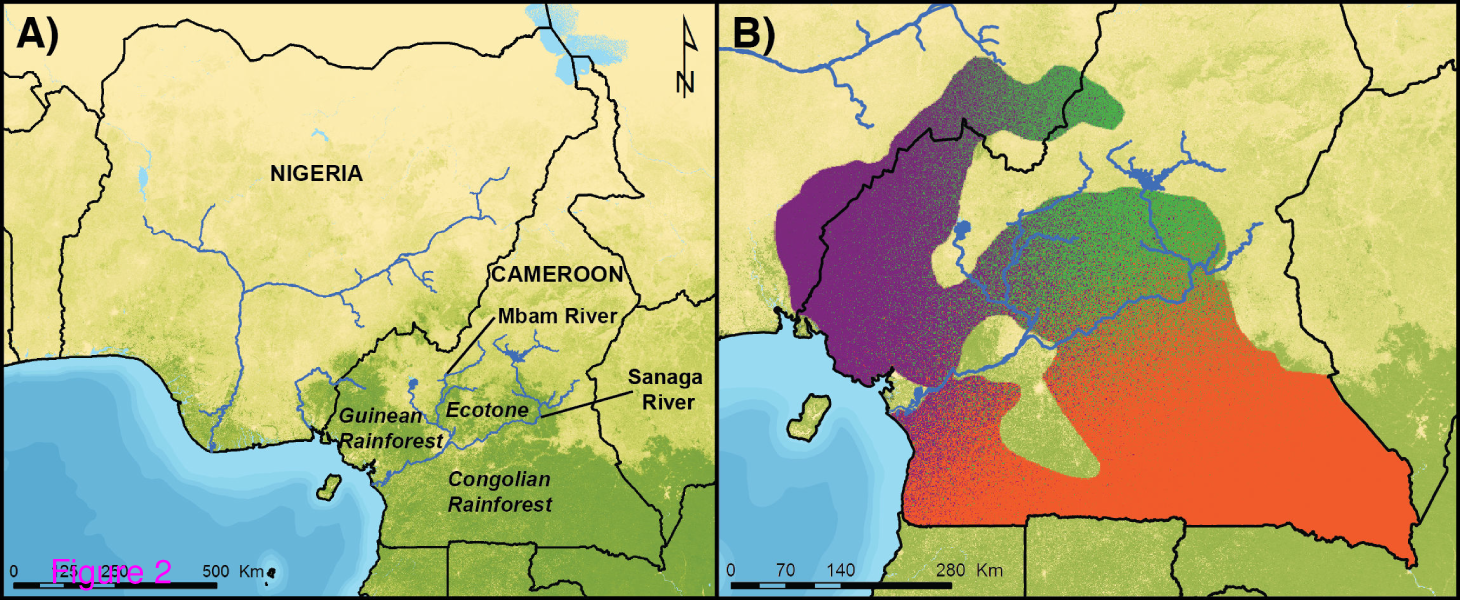
Habitat Types and Chimpanzee Population History in Cameroon and Nigeria. Credit: Sesink Clee et al.

These different rainforest ecosystems converge with savanna in central Cameroon forming a savanna-woodland mosaic known as an ecotone.

“This ecotone is associated with driving diversification in a lot of different species,” Mitchell said. Ecotones are thought to be important in driving variation and diversification of species all over the world.

This particularly fragile savanna-woodland mosaic habitat in central Cameroon north of the Sanaga River is where Mitchell’s genetic analysis identified a population of Nigeria-Cameroon Chimpanzees that was distinct from those living in the mountainous rainforests of northwest Cameroon and eastern Nigeria. They also determined that the population in the ecotone diverged from the western rainforest population about 4,000 years ago —while still remaining closely related members of the same subspecies. (In contrast, this subspecies as a whole diverged from the Central Chimpanzee subspecies (Pan troglodytes troglodytes), whose populations live in Congo River Basin forests south of the Sanaga River, about 200,000 years ago or more.)

In subsequent modeling in a second paper, Mitchell and colleagues concluded that in the Nigeria-Cameroon chimpanzee, a significant amount of genetic difference could come from adaptation to different environments.

In short, these chimps have changed in distinct, genetically noticeable ways, to their lives in different habitats.

Environments Threatened by Climate Change

Yet the habitats these chimps rely on may be particularly threatened, the team’s analysis has showed.

“We were surprised to see that the Nigeria-Cameroon chimpanzees living in the savanna-woodland habitat of central Cameroon are under the most immediate threat of climate change, and may completely lose their habitat within our lifetime,” said Sesink Clee.

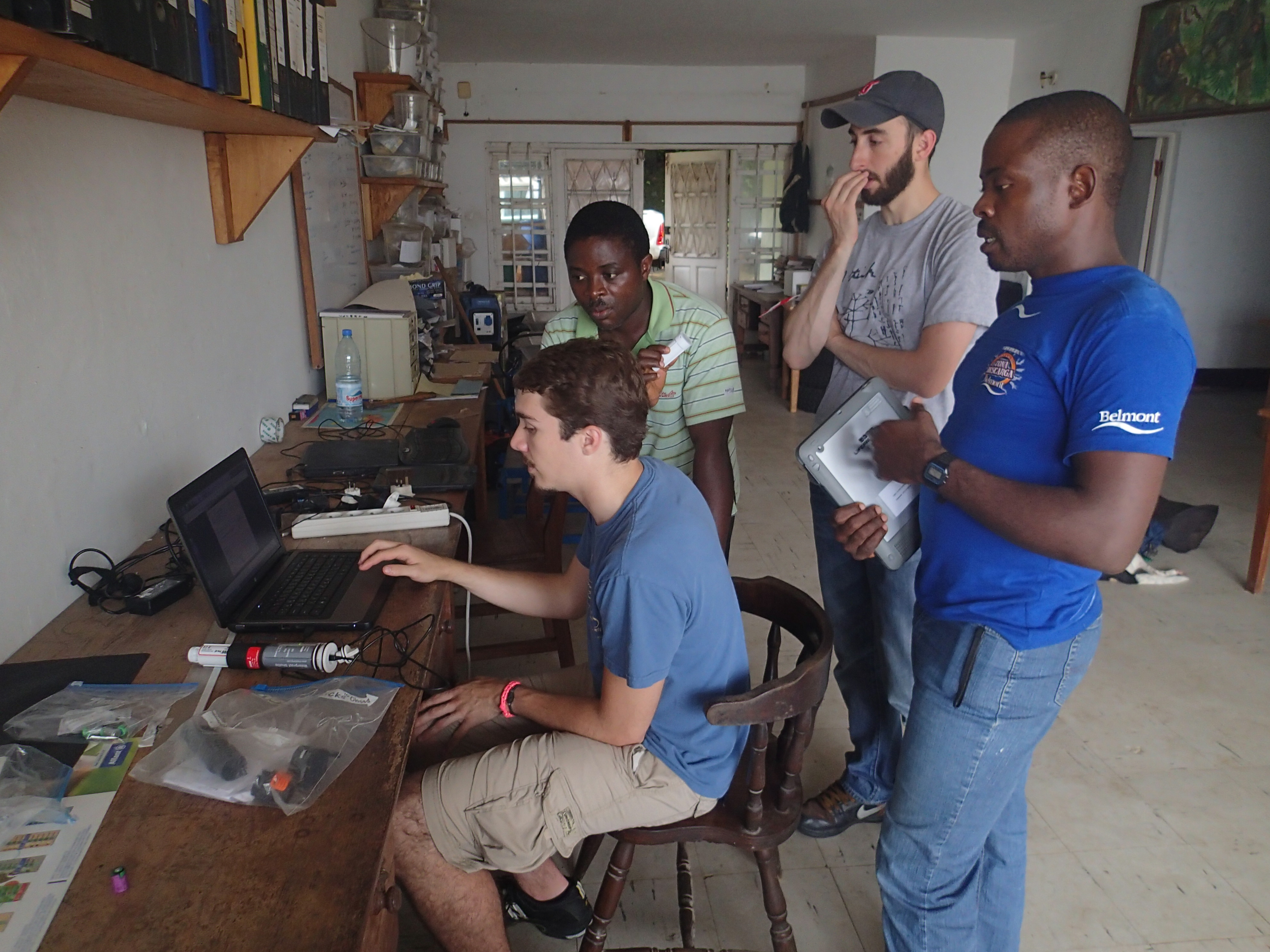
Drexel University researchers Paul Sesink Clee (seated) and Matthew Mitchell (standing, center) analyzing climate data from a field site with researchers from Ebo Forest Research Project. Credit Mary Katherine Gonder

He and colleagues reached this conclusion based on combining detailed chimpanzee location data with the environmental characteristics of these locations. They then predicted how these habitats would change under climate change scenarios for years 2020, 2050, and 2080. The scenarios were provided by the UN’s Intergovernmental Panel on Climate Change and considered a varying range of factors including use of fossil and non-fossil fuels, human population growth, and environmental protection efforts.

While the team predicted little change in the mountainous rainforest habitat, the ecotone habitat of the second population was predicted to decline quickly under all scenarios by the year 2020 and could disappear almost entirely under the worst case scenario by 2080. With roughly half of the 6,000 Nigeria-Cameroon chimpanzees existing in the ecotone habitat of central Cameroon, the results suggest that this subspecies of chimpanzee is particularly vulnerable to climate change.

The authors note that their models may be something of a worst-case scenario for climate change because they do not take into account the potential for these chimpanzee populations to adapt to the changes brought about by climate change, or to migrate to new areas with optimal conditions. On the other hand, chimpanzees continue to face other threats of habitat loss to human land uses, as well as illegal hunting.

“We know very little about Nigeria-Cameroon chimpanzees in the wild,” said Gonder. “But everything we have learned about them suggests that Cameroon is a particularly vital location for preserving the diversity found within the species.  The governments of Cameroon and Nigeria have made important strides in the last five years to save their chimpanzee remaining populations.  The papers published this week in BMC Evolutionary Biology will boost these efforts by providing a solid foundation for policy makers in these countries to make stronger arguments for additional protection in places, such as central Cameroon, which have often been overlooked in ape conservation planning activities.”


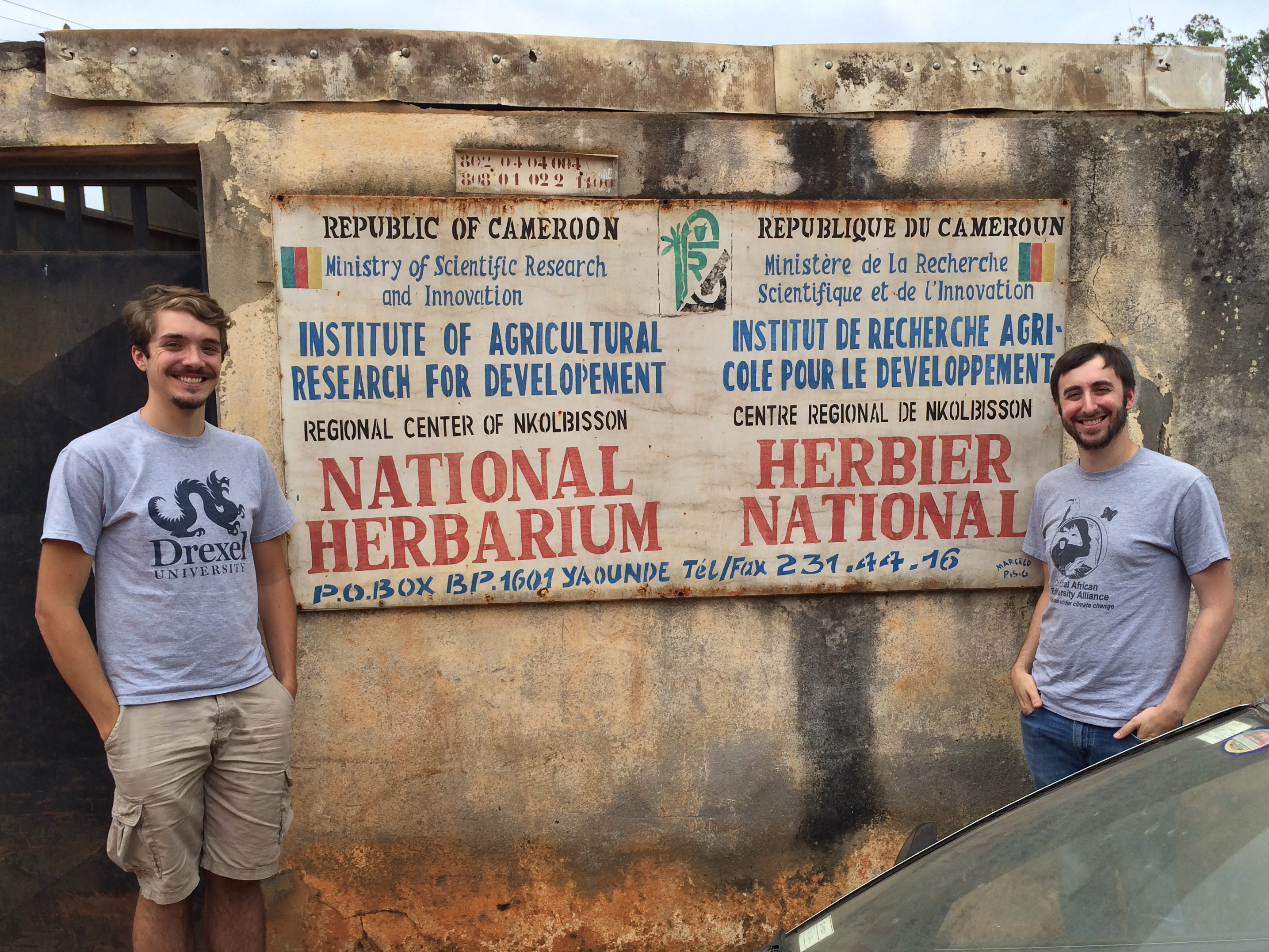
Paul Sesink Clee (left) and Matthew Mitchell (right) in Cameroon

For more about the process of the research described above, see the blog post by Gonder, Mitchell and Sesink Clee on the BMC Series Blog.

For more information about Drexel University’s ongoing research projects in Central Africa, please visit: caballiance.org and bioko.org

For more information on the Nigeria-Cameroon chimpanzee or to read the IUCN conservation action plan, please visit: ellioti.org

For more information on the Gonder Lab at Drexel University, please visit: pages.drexel.edu

Portions of this article were adapted with permission from a press release prepared by BMC Evolutionary Biology.

Images are available for use by the media (with credits provided in file names) here.

The three papers published in BMC Evolutionary Biology are available here:

– See more at: http://drexel.edu/now/archive/2015/January/Endangered-Chimpanzee-Studies/#sthash.lWorlOMU.dpuf

Runners Get a Step Ahead at Drexel

Originally posted on DrexelNow.

Runners and other athletes who have experienced an injury know how vital physical therapy is at helping them get back on their feet.

But even runners who aren’t injured may be putting themselves at risk—and by consulting with physical therapists, they can make changes to their form to keep them going strong, prevent future injuries and even improve their performance.

“Research estimates that between 50-70 percent of runners are injured over the course of a year,” said Robert Maschi, PT, DPT, OCS an assistant clinical professor in Drexel’s College of Nursing and Health Professions who is a leader in the area of running analysis and gait retraining. “Small changes in form have a big effect on the load on the body, and on injury risk.”

Maschi and colleagues at Drexel now offer a suite of physical therapy and other health services specifically geared toward helping runners prevent injury or step up their performance, in addition to existing services for runners recovering from injuries. The new and growing set of health services from Drexel’s College of Nursing and Health Professions is available at the new Parkway Health & Wellness location in Center City, as well as at Drexel’s Recreation Center on the University City campus.

Runners who come for comprehensive assessment receive individual, detailed feedback about their unique running mechanics. Assessments include a thorough analysis of medical and running history as well as a high-tech gait analysis. In this testing, runners perform specific movement screening tests and then run on a treadmill that is monitored by video from multiple angles; physical therapists then use a software program to perform a two-dimensional motion analysis on the video.

“From the video, we can assess joint positions and movement patterns and measure different distances and angles using the software, thus generating a report that looks at various aspects of the client’s running mechanics and running gait,” Maschi said.

Maschi and the other physical therapists performing these assessments then review results with their clients. They may make recommendations to change an aspect of their running form, such as to increase or decrease step length, or to change step width. “Foot strike patterns have different implications for the way that tissues get loaded, and we may make modifications based on that,” Maschi said.

Clients can then take home a detailed packet of personalized information and photos of their own running form, along with the physical therapist’s recommendations.

“It’s a lot different to actually see yourself and your physical form when running, compared to how you think you look when you run,” said Kevin Gard, PT, DPT, OCS, a clinical professor and director of the doctoral program in physical therapy in Drexel’s College of Nursing and Health Professions.

At Parkway Health & Wellness, runners can also participate in research studies about running-related health concerns such as plantar fasciitis. Researchers in Drexel’s Department of Physical Therapy and Rehabilitation Sciences are currently conducting several studies of running injury and are hoping to shed light on reasons behind the high rate of injury and aid prevention.

Services for runners at Drexel’s Parkway Health & Wellness site will also soon expand to include close integration with nutrition and performance counseling, physiological testing, behavioral health counseling to address behavioral aspects of performance and a thorough integration with all other services available to patients at that location.

Most insurance is accepted for medically necessary physical therapy services. The running analysis assessment service is available for a fee of $200. To schedule an appointment for running analysis or physical therapy services, contact: 215.571.4287, or email ptappts@drexel.edu.

– See more at: http://drexel.edu/now/archive/2015/January/Running-Clinic/

Teens Abusing Prescription Pills Are A Growing Concern, Drexel Researchers Say

Pills image by Jamie, CC BY 2.0.

Originally posted on DrexelNow.

Parents and physicians still aren’t doing enough to address the rise of “pharming,” or recreational use and abuse of prescription drugs, among teenagers, according to public health researchers at Drexel University.

“The medicine chest is a drug dealer that no one ever thinks about,” said Renee Turchi, MD, MPH an associate professor at the Drexel University School of Public Health and College of Medicine and co-author of a recent review article about pharming in the peer-reviewed physicians’ journal Contemporary Pediatrics.

Prescription drug abuse among teenagers is a growing area of concern for several reasons, according to Turchi and co-author Susan Solecki, a clinical assistant professor in Drexel’s College of Nursing and Health Professions. They cite federal data reporting that prescription medications are the drugs second-most commonly abused by adolescents (after marijuana), and are the drugs with the biggest growth in abuse among those aged 12-24. Abuse of these drugs and of over-the-counter medications has surpassed the use of illicit and illegal drugs such as cocaine and heroin.

Turchi, a pediatrician, learned about pharming from a friend who works in law enforcement, and subsequently enlisted Solecki, who is a public health doctoral candidate and Turchi’s advisee, to work together on the new report to raise awareness of the issue among other health care practitioners.

Teens may perceive prescribed drugs as “safe” or “clean” in comparison to street drugs—when in reality, pills, especially when taken in combination, can have dangerous and even lethal side effects. Turchi and Solecki cite data showing that 14 percent of high school seniors have used prescription drugs for nonmedical reasons at least once. Also, prescription drug use can be a predecessor to heroin use for teens and young adults.

Some reports even point to a trend in “pharm parties” or “skittling parties” (named for the colorful candy). In these parties, teens combine different pills in a shared bowl and each swallow a few pills indiscriminately—sometimes with an alcohol chaser. Combining medications in this way, and with alcohol, can cause stroke, heart attack, irreversible brain damage or death.

When teens abuse prescription pills, parents may be unaware because there is no telltale odor, and these pills may not cause slurred speech or other obvious signs of being high.

The Drexel researchers want to send a wake-up call to both parents and physicians to educate teenagers about the risks of prescription pills, and to restrict access to medications at home.

Their main recommendations include:

  • Get rid of old prescription drugs in the home; it’s not safe to keep them any longer than needed. The U.S. Drug Enforcement Agency sponsors a National Prescription Drug Take Back Day, and state and municipal authorities provide other options. For example, in Pennsylvania, local police stations have deposit boxes where anyone can drop off unneeded medications for safe disposal.
  • Lock medicine chests to keep medications safe if you have to have prescriptions in a home with teens or where teens may visit.
  • Talk to teens about the risks of prescription drug interactions and allergic reactions. Just because it was prescribed by a doctor doesn’t mean it’s safe for everyone.
  • Health care providers should screen for pill-taking behavior when screening adolescents for risk behaviors.
  • Health care providers can also talk to parents to be sure they are aware of the risks and keeping medications safe in their home.

Solecki said that the growing availability of prescription pills makes it all the more important to keep those medications safe from improper use.

“We talk about safety of keeping drugs away from toddlers, but teenagers have access right from the medicine cabinet,” she said.

– See more at: http://drexel.edu/now/archive/2015/January/Teen-Prescription-Drugs/

Do the Best Supplements Grow on Bushes? Nutrition Expert Recommends Four Functional Foods for Fitness

Drexel News Blog This time of year, it seems everyone is refocusing on healthy eating and fitness in a furor of New Year’s goals. And some are looking for the fast track in the form of so-called “super foods.” According to Stella Volpe, PhD, who … Continue reading Do the Best Supplements Grow on Bushes? Nutrition Expert Recommends Four Functional Foods for Fitness