Tag: public health

How “Psychosocial Vital Signs” in Electronic Medical Records Can Improve Medical Care and Public Health

Originally posted on DrexelNow.

A health checkup involves some standard measures of physical health that any patient can find familiar: Height, weight, blood pressure, and so on. And medical professionals routinely ask about some behavioral measures such as alcohol and tobacco use. Medical and public health experts know there are many more social and behavioral aspects of people’s lives that have a direct impact on how healthy they are, and that taking those details into account can yield better diagnoses and treatments for individuals. If that information can be aggregated and collected at a population scale, it can also guide development of better-designed health care systems and improved population-wide health outcomes.

However, there is currently no standard agreement on which behavioral and social information medical professionals should collect from patients, and no systemic use of these measures in the U.S. health care system.

Today, a committee convened by the Institute of Medicine of the National Academies (IOM), released a set of recommendations of 12 social and behavioral measures that should be collected as part of patients’ electronic health records. Ana Diez Roux, MD, PhD, MPH, dean of the Drexel University School of Public Health, served on the IOM committee which developed the recommendations for these “psychosocial vital signs.” The committee made its selections based on criteria including the strength of the evidence that a given domain is associated with health; the usefulness of measuring the domain for research and for individual and population health; and the availability of standard and valid ways of measuring the domain, among other factors.

The domains and measures the IOM committee recommends collecting as part of electronic health records are:

  • Alcohol use
  • Race and ethnicity
  • Residential address
  • Tobacco use & exposure
  • Census tract-median income
  • Depression
  • Education
  • Financial resource strain
  • Intimate partner violence
  • Physical activity
  • Social connections & social isolation
  • Stress

The committee also weighed practical considerations of the changes in clinical practice required to collect these measures.

“The inclusion of social and behavioral data routinely into electronic health records can lead to real transformations in the ways in which doctors use information to diagnose and treat patients, and is also of enormous value for understanding the health of populations and what we can do to improve health for all,” said Diez Roux. When health data systems are designed to collect information about social factors including financial challenges and social isolation, not only are physicians better informed about the underlying determinants of their patients’ health, but data in aggregate can be de-identified and used by city and regional public health departments to better understand their populations’ broader needs.

– See more at: http://drexel.edu/now/archive/2014/November/Psychosocial-Vital-Signs/

Federal Legislation Ignores PTSD Toll on Civilians

Originally posted on DrexelNow.

Federal laws explicitly addressing post-traumatic stress disorder (PTSD) have overwhelmingly focused on the needs of military personnel and veterans, according to a new analysis published in the Journal of Traumatic Stress.

The study, authored by Jonathan Purtle, DrPH, an assistant professor at the Drexel University School of Public Health, is the first to examine how public policy has been used to address psychological trauma and PTSD in the U.S., providing a glimpse of how lawmakers think about these issues.

Purtle found that in federal legislation introduced explicitly to address PTSD, an overwhelming majority of the language – more than 90 percent of the mentions of PTSD in these bills – showed efforts were targeted exclusively at military personnel. More than 90 percent of mentions of PTSD in the bills were likewise intended to address consequences of combat exposure.

This emphasis does not match with the frequency of PTSD in the U.S. population.

Although trauma and PTSD are serious issues affecting military populations, the raw number of people affected by PTSD includes substantially more civilians simply because the civilian population is so much larger,” said Purtle.

As an example, Purtle pointed to the specific language of the bill that created National PTSD Awareness Day. The text of that resolution describes PTSD as a “wound of war” that affects people in the military and does not acknowledge that PTSD exists among civilians.

Many types of traumatic events can cause PTSD, including violent injury, car accidents, surviving life-threatening diseases, sexual assault and natural disasters, as well as combat exposure. One-time and chronic exposure to traumatic events can also cause traumatic stress, involving some symptoms common in PTSD, without matching the full pattern of diagnostic criteria for PTSD.

Purtle also found that, just as lawmakers appeared to respond to PTSD as primarily a military concern, they applied the concept of traumatic stress (other than PTSD) as a concern affecting civilians. About 75 percent of the bill sections about traumatic stress that did not mention PTSD were targeted to civilians’ needs. For example, a number of bills were introduced to address the mental health needs of U.S. civilians after the terrorist attacks of September 11, 2001, but these bills did not explicitly mention PTSD.

“It’s almost as if lawmakers didn’t want to suggest that PTSD was also a disorder among civilians,” Purtle said. “This gives a sense of how elected officials at the federal level might think about the dimensions of this problem, and shows that it doesn’t match up with what’s known about who gets PTSD.”

Although most civilian-targeted bills Purtle examined did not explicitly mention PTSD, their policies addressing trauma among civilians may still help individuals experiencing PTSD. Civilians with PTSD, as well as military members and veterans, may also benefit from policies addressing PTSD and trauma that were established through state and local legislation or via non-legislative administrative policies. These other policies were outside the scope of Purtle’s analysis, and have not yet been studied. This study specifically included only federal legislation introduced to Congress between 1989 and 2009.

The emphasis on military personnel in legislation addressing PTSD may reflect the history of the disorder, which first became known through cases in military members and veterans following combat experiences. The federal government’s role in providing medical care for veterans could also contribute to the legislation’s heightened emphasis on military PTSD in contrast to civilian PTSD.

– See more at: http://drexel.edu/now/archive/2014/November/PTSD-Public-Policy-Study/

Campaign Celebrates Food Stamps’ Half Century Protecting Public Health

Originally posted on DrexelNow.

Fifty years ago, American lawmakers and the public found the presence of hunger in U.S. communities so appalling that people came together and legislators reached across the aisle to do something about it: they passed the Food Stamp Act of 1964, providing federally funded nutritional assistance to individuals and families in need.

Although food stamps have become a hot-button political issue, public health experts and anti-poverty advocates have long held that the program, now known as SNAP (the Supplemental Nutrition Assistance Program), is a tremendous public good.

“Our research has shown that SNAP is one of the single most effective pieces of legislation in protecting the health of young children and promoting their cognitive, emotional and social development,” said Mariana Chilton, PhD, an associate professor and director of the Center for Hunger-Free Communities at Drexel University.

Now, a nationwide campaign, initiated by Chilton and her colleagues at Drexel’s School of Public Health, will celebrate 50 years of food stamps’ health benefits and support for working parents–a timely reminder near the one-year anniversary of cuts to SNAP on Nov. 1, 2013. Those cuts reduced benefits for every family participating in the program.

The campaign invites everyone to share photos, experiences, thoughts, questions – anything they would like to say about SNAP– using the hashtag #snap4SNAP, on social media on Oct. 30 from 2-4 p.m. EDT and in the days and weeks to follow. Contributors are invited to share their perspectives on how SNAP helps families, facts about SNAP or thoughts about the impact of cuts to SNAP – with photos when possible.

More than 50 organizations have committed to participate in #snap4SNAP. The hashtag and campaign play on the word “snap” also being used for the action of taking a photo – inspired by the groundbreaking “Witnesses to Hunger” program based at Drexel, which, since 2008, has engaged low-income parents in sharing photos of their experiences with hunger and poverty to bring their first-hand experiences and knowledge into the public conversation. Participants in Witnesses to Hunger will also be actively contributing to the #snap4SNAP conversation on Oct. 30.

“The #snap4SNAP campaign aims to illuminate the real life experiences of SNAP recipients and give people a platform to talk about the program,” said Chilton. “By using social media, we can bring a dose of reality to the conversation around hunger.”

For more information and frequently asked questions about the #snap4SNAP campaign, and to see a list of some of the participating organizations, visit Drexel’s Center for Hunger-Free Communities website.

– See more at: http://drexel.edu/now/archive/2014/October/snap4SNAP-Celebrates-Food-Stamps/

A.J. Drexel Autism Institute Receives $3.6 Million Gift to Launch Life Course Outcomes Research Initiatives

Originally posted on DrexelNow.

The A.J. Drexel Autism Institute at Drexel University has received a grant of $3.6 million from an anonymous donor to launch four major initiatives of its Life Course Outcomes research program, focused on understanding and improving quality of life issues for people on the autism spectrum at all ages. This program is led by Autism Institute professor Paul Shattuck, PhD, a nationally recognized expert on these issues.

“Finding ways for people on the autism spectrum to pursue fulfilling lives as full members of the community is vitally important work,” said Drexel University President John A. Fry. “Thanks to this incredibly generous gift, Drexel can help Dr. Shattuck expand his pioneering work in this area and further the A.J. Drexel Autism Institute’s critical mission.”

Four major research initiatives being advanced by the Life Course Outcomes Program include:

  1. Indicators Initiative, assessing community and national indicators of services and outcomes
  2. Promising Practices Initiative, examining innovative approaches to service provision and policies
  3. Research Leadership Initiative, expanding the field of useful research by training additional scholars
  4. Long-Term Knowledge Initiative, doing studies that discover how life unfolds over a long period of time for people on the autism spectrum and their families.

The Autism Institute leadership is actively pursuing additional partnerships for these key initiatives.

“About 500,000 adolescents on the autism spectrum will enter adulthood in the next decade,” said Shattuck, an associate professor at the A.J. Drexel Autism Institute with a secondary appointment in Drexel’s School of Public Health. “We believe people on the autism spectrum are valuable members of our communities. They have roles to play, dreams to achieve and contributions to make. We see an urgent need for research aimed directly at understanding what strategies, beyond clinical interventions, promote positive outcomes and prevent negative ones – both for people on the autism spectrum and the families and communities they are part of.”

Shattuck joined Drexel in 2013 and is one of only a handful of scholars in the world whose work is wholly devoted to answering these kinds of questions. The A.J. Drexel Autism Institute was established in 2012 as the nation’s first autism research center based on a public health science approach.

Drexel’s Life Course Outcomes Program addresses questions about quality of life across the entire lifespan. Are children getting diagnosed and entering services at an early age? What’s holding back more adults on the spectrum from attending college or becoming gainfully employed? What kinds of services do people receive compared to what they need? What’s working and what’s not?

The program’s aims address the needs and challenges recognized by many adults on the autism spectrum as well as by parents of children with autism who anticipate the so-called “services cliff” that occurs when young adults on the spectrum age out of supports that are available to children and adolescents.

Sonia Voynow, a psychotherapist and parent of a teenager with ASD, who leads support groups for parents and grandparents of children on the spectrum, noted “a sense of terror” among parents such as herself when anticipating their kids’ future. “We know that our children are capable of so much when they have the right supports,” Voynow said. “But we don’t know where to find these resources, or if they even exist, particularly as our kids reach adulthood. Drexel’s Autism Institute, by using a systematic and organized approach to focus on what works for these kids, is filling a huge, and growing, need.”

“No approach to autism from a public health perspective could be comprehensive without considering the experiences of individuals and communities across the entire lifespan,” said Craig Newschaffer, PhD, director of the A.J. Drexel Autism Institute and a professor in Drexel’s School of Public Health. “We are grateful to our anonymous donor whose generosity will help Drexel lead the way on research with a lifespan perspective. Dr. Shattuck will answer essential questions for individuals on the spectrum, their families and our communities.”

As the Life Course Outcomes program grows, Shattuck and colleagues at Drexel envision – as described in a recent JAMA Pediatrics editorial an approach that is centered on innovation and investment. Their aims include learning from innovations already underway in communities; measuring systematically and repeatedly to quantify societal impacts over time; planning large, long-term life-course studies for autism; and increasing the number of scholars pursuing this line of work.

“Ultimately, we need to know if the billions spent to move the needle on life outcomes like employment, health, community contribution, and social participation are having a measurable impact,” said Shattuck. “This gift positions the A.J. Drexel Autism Institute to lead the way in figuring out how to strengthen the connection between efforts and outcomes so we know what’s working for whom.”

For More Information

To learn more about research at the A.J. Drexel Autism Institute, see the special report in Drexel University’s research magazine, EXEL: Exploring the Spectrum.

To learn more about the A.J. Drexel Autism Institute, visit the institute’s website or follow on Facebook or Twitter.

– See more at: http://drexel.edu/now/archive/2014/September/Autism-Life-Course-Research/

“Unconscionable to Fail Our Children This Way”: Drexel’s Child Hunger Expert Available to Comment on USDA 2013 Household Food Security Data

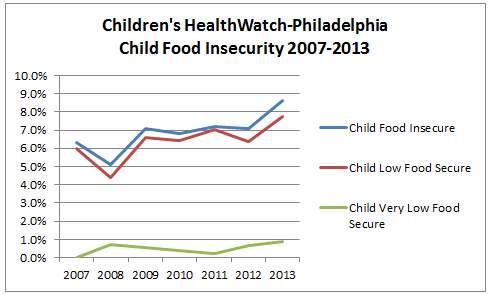
Drexel News Blog Today the United States Department of Agriculture (USDA) Economic Research Service released its annual report on food security in the United States. In 2013, more than 49 million people in the U.S., including more than 16 million children, were living in food … Continue reading “Unconscionable to Fail Our Children This Way”: Drexel’s Child Hunger Expert Available to Comment on USDA 2013 Household Food Security Data

Drexel Researchers Call for an Innovation and Investment Approach to Autism Population Needs

Drexel News Blog A new study published this week in the journal JAMA Pediatrics put a price tag on the services for individuals with autism across their lifespan: from $1.4 million for those without intellectual disability to $2.4 million for those with both autism and … Continue reading Drexel Researchers Call for an Innovation and Investment Approach to Autism Population Needs

In Utero Exposure to Antidepressants May Influence Autism Risk

Originally posted on DrexelNow.

A new study from researchers at Drexel University adds evidence that using common antidepressant medications during pregnancy may contribute to a higher risk of autism spectrum disorders (ASD) in children, although this risk is still very small.

Results from past studies of prenatal use of selective serotonin reuptake inhibitors (SSRIs) and ASD risk have not been consistent. An ongoing challenge in this line of research is trying to tease apart potential effects of the medication on risk from the effects associated with the condition for which the medication was prescribed (most commonly depression). Based on past studies, both SSRIs and genetic factors associated with depression are likely associated with greater risk of ASD.

This new study, published online ahead of print last month in the Journal of Autism and Developmental Disorders, suggests that under-reporting of maternal depression, if not properly considered in analyses, may influence results of studies trying to address this question.

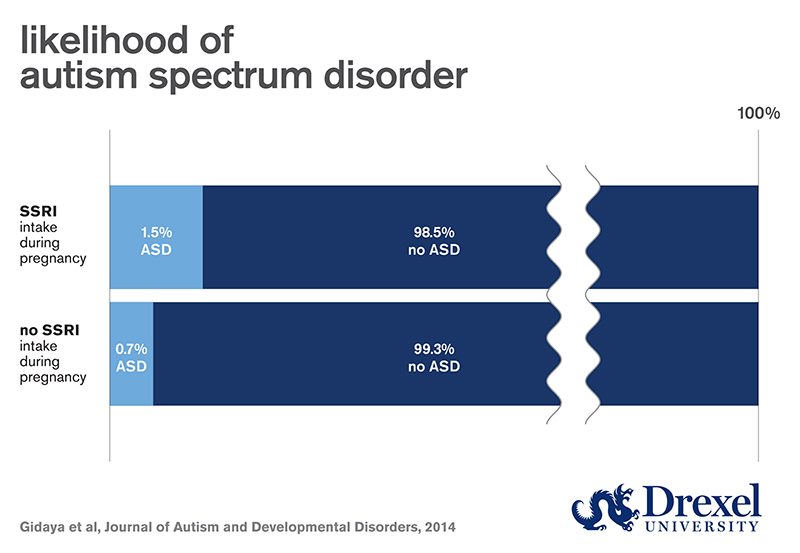
In the study, the Drexel team analyzed large population based registers of nearly 750,000 births in Denmark from 1997 through 2006. They found that about 1.5 percent of children born to women who had taken an SSRI during pregnancy were diagnosed with ASD, compared to about 0.7 percent of children born to an otherwise similar group of women not taking the medication.

“We found a two-fold increased risk for ASD associated with in utero exposure to SSRIs compared to the unexposed reference group” said lead author Nicole Gidaya, PhD. “More importantly, in our analysis we accounted for under-reporting of maternal depression in the register. This suggests that under-reporting of the confounder, maternal depression, may be a limitation in approaches previously used in the other studies.”

Gidaya, who performed this study while a doctoral student in the Drexel University School of Public Health, noted that “if the increased ASD risk we saw here is real, it is important to realize that the number of ASD cases that could be prevented by reducing SSRI exposure in pregnancy still represents only a small fraction of overall cases of ASD.”

The researchers further advised caution in interpreting the results in practice. Because of the challenges of distinguishing effects of medications from those of the condition indicating their use, more research in larger study populations will be needed to confirm the findings. In addition, the decision whether or not to use an SSRI in pregnancy is a complex one; pregnant women and their doctors need to consider women’s physical and mental health needs as well as other pregnancy-associated risks, including risks associated with untreated depression both during and after pregnancy.

However, the research team believes that the greater value of this finding is to direct further attention on understanding the mechanisms by which in utero SSRI exposure might influence the developing brain. Serotonin is a neurotransmitter whose use by the brain is altered during depression and modified by SSRI use, and has been shown to play an important role in brain development.

The authors of the current study point out that there is still a need for more population studies of possible associations between maternal SSRI use and autism, in light of the limitations of the present study and the conflicting results within the field’s previous studies of the question. They say future studies should use a large population sample where there is good quality data about exposure to medication, mental health diagnoses as well as ASD diagnoses.

“As we complete research in our attempts to understand autism’s causes we continue to realize that there are likely many genetic and non-genetic contributors,” said Craig Newschaffer, PhD, director of the A.J. Drexel Autism Institute and professor in Drexel’s School of Public Health, and the study’s senior author. “We must begin trying to map these multiple risk factors on to common pathways, so that these pathways can be a focus in our effort to prevent the impairment associated with ASD.  Pathways involving the brain’s serotonin system are still one viable candidate.”

Gidaya performed this research with the support of funding from Drexel’s Office of International Programs which allowed her to travel to Denmark.

– See more at: http://drexel.edu/now/archive/2014/June/Antidepressants-Autism-Risk/

Child’s Autism Risk Accelerates with Mother’s Age Over 30

Originally posted on DrexelNow.

Older parents are more likely to have a child who develops an autism spectrum disorder (ASD) than are younger parents. A recent study from researchers from the Drexel University School of Public Health in Philadelphia and Karolinska Institute in Sweden provides more insight into how the risk associated with parental age varies between mothers’ and fathers’ ages, and found that the risk of having a child with both ASD and intellectual disability is larger for older parents.

In the study, published in the February 2014 issue of the International Journal of Epidemiology, researchers report that fathers’ and mothers advancing ages have different impacts on their child’s risk. The rise in ASD risk with parental age was greater for older mothers as compared to older fathers.

“The open question at hand really is, what biological mechanisms underlie these age effects?” said Brian K. Lee, PhD, an assistant professor in the Drexel University School of Public Health and research fellow of the A.J. Drexel Autism Institute, and senior author of the study.  The observed differences in risk based on mothers’ and fathers’ ages point to a need to continue investigating underlying mechanisms of ASD that may be influenced by a mother’s age, Lee said, even though much recent discussion has focused on fathers’ and even grandfathers’ ages.

The risk of having a child with ASD had a more complicated relationship to age in women than in men – whose risk of fathering a child with ASD increased linearly with age across their lifespan. Among women giving birth before the age of 30, the risk of ASD in the child showed no association with age — it was simply very low. But for babies born to mothers aged 30 and older, the chance of developing ASD rose rapidly with the mother’s age.

Lee noted that the non-linear maternal age effect that is relatively stronger than the paternal age effect on ASD risk has been observed in previous studies, but has not received much attention.

Multiple mechanisms could be in play to account for the different patterns of risk, including environmental risk factors occurring in women after age 30. Factors such as complications in pregnancy could also underlie the effect of mothers’ ages on a child’s ASD risk but not a paternal age effect. The linear, steady increase in risk associated with fathers’ ages is consistent with the hypothesis of increased genomic alterations over the father’s lifespan that can increase risk of ASD, Lee said.

In this study, Lee and colleagues analyzed a large population registry sample of 417,303 children born in Sweden between 1984 and 2003, adjusted for numerous possible factors that could vary with parental age and also influence risk, such as family income and each parent’s psychiatric history.  The study also used a particularly comprehensive case-finding approach, to identify more ASD cases than other studies might, based on all pathways to care in a socialized health system.

A goal was to study these parental age effects in more detail by looking at possible differing risks of ASD with and without intellectual disability – one of the most serious comorbid diagnoses with ASD, with a significant impact on functional status in life. This was the first population-based study with an ASD sample large enough to study ASD risk in populations of children with and without intellectual disability.

“When considering risk factors, we can’t necessarily lump all ASD cases together, even though they fall under a broad umbrella of autism,” Lee said. “We need to keep an open mind in case intellectual disability might be a marker of a different underlying mechanism.”

The finding that ASD with intellectual disability had a stronger association with older parents, compared to ASD without intellectual disability, supports continued investigation of possible different mechanisms.

Lee noted that, although age effects are important indicators of risk at the population level that could eventually help researchers identify preventable causes of disability, they aren’t very significant for a couple’s family planning because the overall risk remains low. “The absolute risk of having a child with ASD is still approximately 1 in 100 in the overall sample, and less than 2 in 100 even for mothers up to age 45.”

– See more at: http://drexel.edu/now/archive/2014/April/Autism-Risk-Older-Parents/

Drexel Program Participant Tianna Gaines-Turner Gets a Seat at the State of the Union

Originally posted on DrexelNow.

Tianna Gaines-Turner, a low-income mother of three children from North Philadelphia, will attend the State of the Union address as a guest of Pennsylvania Senator Bob Casey on Jan. 28, the Senator announced today. Her attendance marks a new achievement of a Drexel program raising the voices of families living in poverty to gain a place in the national conversation.

Calling for a renewed focus on jobs and the economy, working families and early childhood education, Casey announced that he had invited Gaines-Turner to attend Obama’s speech with him because policies and programs enacted in Washington have major impacts on working families.

Gaines-Turner is an expert in hunger and poverty, employment and the true struggles of working families – because she has experienced all of these challenges first-hand.

“We don’t want a hand out. We want a hand in,” Gaines-Turner said. “I hope to hear tomorrow at the State of the Union what we are going to do about hunger and poverty. I want to hear a solid plan to end them.”

Since 2008, Gaines-Turner has participated in Witnesses to Hunger, a community-based participatory research and advocacy program based at the Drexel University School of Public Health’s Center for Hunger-Free Communities and founded by associate professor and Center director Mariana Chilton, PhD. The Witnesses to Hunger program features the voices of true experts, including Gaines-Turner, by equipping caregivers of young children with digital cameras to document and describe their experiences with hunger and poverty. After beginning in Philadelphia, the program has expanded to multiple other sites, including Boston, Baltimore and Camden, N.J., with more than 80 participants in total. A new site in Sacramento, Calif., will begin recruiting soon. Through their photos and testimony, the Witnesses spark dialogue, engage and inform policy makers and inspire change.

As a Witness to Hunger, Gaines-Turner has spoken eloquently about poverty, unemployment, homelessness and struggles to afford medical care for her children in pursuit of policy changes to support better opportunities for families like hers. She has attended face-to-face meetings with representatives at the U.S. Capitol and Pennsylvania State House, written testimony submitted to the House Budget Committee, and spoken in public and through media interviews, including multiple appearances as a guest on the “Melissa Harris-Perry Show” on MSNBC.

“Her story and her struggles are emblematic of what’s happened in a lot of families,” Casey said at a press conference today. Families like Gaines-Turners’, he said, are “working hard but falling behind, working but not making the kind of progress that should result from hard work.”

“Our nation’s leaders have to be accountable to the families and communities they serve, and I know Tianna will be listening closely to keep a real perspective on what she hears at the State of the Union,” said Chilton. “I’m incredibly proud of Tianna and the women and men of Witnesses for all they have achieved, and are continuing to do, to shape the conversation around breaking the cycle of poverty and the need for programs and wages that will support low-income families and their communities.”

– See more at: http://drexel.edu/now/archive/2014/January/Witness-to-Hunger-Tianna-Gaines-Turner-SOTU/