“Roads are essentially the primary feature of human civilization at this point,” according to Dane Ward, a doctoral student in environmental science at Drexel University who is presenting research at the Ecological Society of America (ESA) meeting.
Perhaps not surprisingly, Ward, along with fellow doctoral students Ryan Rebozo and Kevin P.W. Smith from the Laboratory of Pinelands Research led by Walter Bien, PhD in Drexel’s College of Arts and Sciences, took advantage of a cross-country roadtrip from Philadelphia to the meeting in Sacramento this week for some extra ecological data collection.
“While traveling across the country and passing through different types of environments, we stopped every few hundred miles to evaluate the immediate roadside vegetation and comparing that to the plants in the natural environments 20 meters away from the road.”
Their cross-country look at roadside ecology is a new venture, but their scientific work closer to home in the New Jersey Pinelands also has a relationship to the road.
What Flower Prefers to Grow After You Mow?
A prescribed burn at the Warren Grove Range in the New Jersey Pinelands. Credit: Walter Bien, PhD
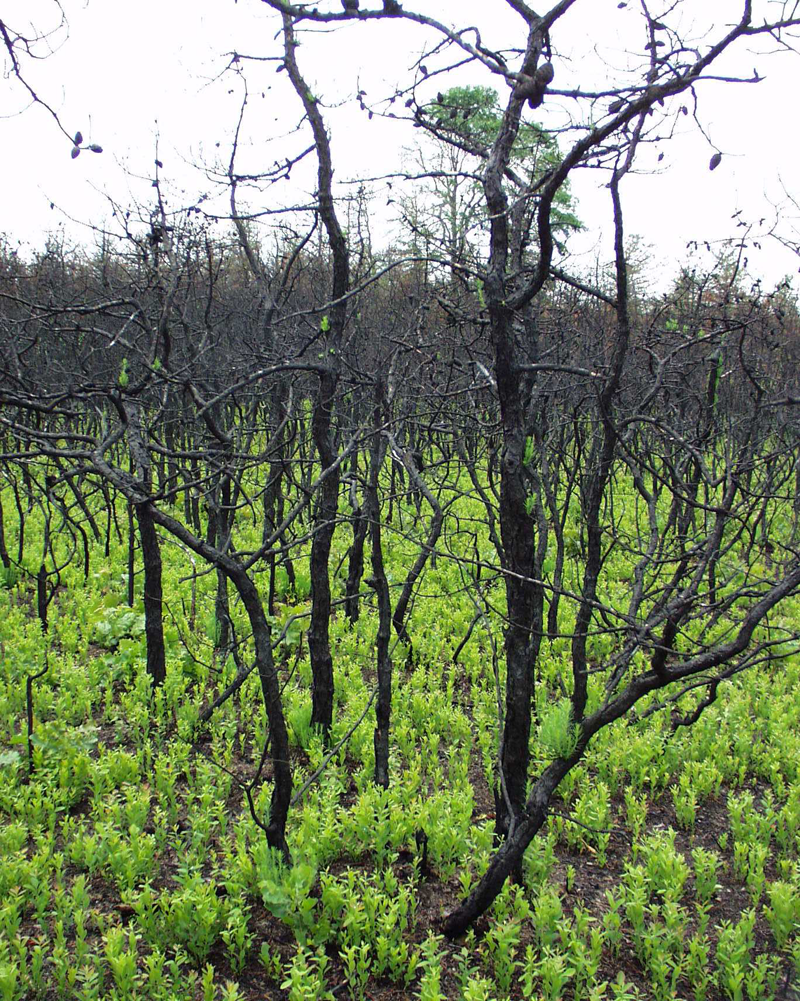
Shrub regrowth after a prescribed burn in the New Jersey Pinelands. Credit: Walter Bien, PhD
A syrphid fly visits the flower of a Pine Barrens gentian. Credit: Lee Ann Haaf
With their attractive purple and pink flowers, gentians are popular as cultivated garden plants. The Pine Barrens gentian species (Gentiana autumnalis), thrives after its ecosystem has experienced disturbance, as one of the earliest species to begin re-inhabiting empty spaces – a phase known as early succession.But the gentian and other early successional species in the Pine Barrens are growing rare because of human intervention: suppressing wildfires, which are the most common natural disturbance in the area. The Pine Barrens of New Jersey are second only to California in the frequency of wildfires. Suppressing them protects human lives nearby, but means there are far fewer disturbed places where gentians prefer to grow.
Rebozo said that currently both mowing and prescribed burns are rarely used as management practices for successional species in the Pine Barrens. For his research, he worked with the New Jersey Air National Guard to implement prescribed burns for experimental purposes at the Warren Grove Range, where Drexel’s Laboratory of Pinelands Research conducts environmental research. Rebozo also identified sites where gentians grow unmanaged or mowed, including one mowed roadside site where gentians happened to grow.
Rebozo found that where mowing and burning disturbances were introduced, the gentians responded with increased plant density (more than doubled at some sites), flowering percentage and patch size – often within one year of the disturbance.
Prescribed burns had an even stronger positive impact on gentian growth and reproduction than mowing did.
“With a burn comes not only clearing of vegetation, but also an influx of nutrients,” Rebozo said. “The plants respond well to that in terms of flowering and the number of seeds they set the next year.”
When Snakes Meet the New Jersey Highway
Roads are a challenge for northern pine snakes (Pituophis melanoleucus) in the New Jersey Pine Barrens, based on the findings that Ward will present at the ESA meeting on Aug. 15. At this meeting, Ward will also become chair of the student section of ESA, after serving as vice chair for the past year.
A map shows the population distribution of northern pine snakes in the eastern U.S. and in southern New Jersey.
A map of the northern pine snake’s habitat in southern New Jersey showing habitat fragmentation by roads. Red section is the Warren Grove Range (WGR) where Drexel’s Laboratory of Pinelands Research performs most of its work. Credit: Dane Ward
Ward has worked on both substrate experiments – testing how well snakes move across different types of road surfaces – and landscape-level analyses of how much snake-friendly habitat is actually available for pine snakes without requiring dangerous road-crossings. He has found that snakes move much faster, and with less sinuous movement, on sand compared to asphalt and concrete surfaces.“Then we used that knowledge and looked at the landscape,” Ward said.
In New Jersey, the most densely populated state in the country, the network of roads can dramatically shape the area of land that snake populations can occupy without facing significant risk of population loss during road crossings.
“Roads reduce the number of snakes we can have by creating more small patches of usable habitat, in many cases too small to support even a single pine snake,” Ward said.
Ward analyzed the road layout and habitat types in the pine snake’s historic range in New Jersey and identified a total of 3,872 habitat patches divided by roads and natural barriers. Of those, only 156 patches were of a large enough size to support a small population of 3-5 adult snakes.
Ward said this work has helped inform ongoing efforts in the state to mitigate the impact of roads and provide connectivity for snakes and other wildlife to cross them safely. Two years ago, the New Jersey Air National Guard agreed to participate in a pilot study to test the feasibility of using culverts to guide snakes under roads as part of a larger study of northern pine snakes at Warren Grove Gunnery Range. The New Jersey State Department of Transportation installed culverts under portions of the Atlantic City Expressway last year.
Adult snakes tend to have a good idea of where they are and what is around them, but neonates, or newborn snakes, don’t have those mental maps established when they first emerge from the nest. Smith is tracking neonate pine snakes to find out where they go and where they stay to get a deeper picture of the species’ habitat needs. He is supplementing that tracking with simple experiments to find out why snakes might go one way or another.
Smith’s tracking of neonate pine snakes over two years has shown that the young snakes stay fairly close to the nest in their first year – ranging from 30 to about 250 meters away – but use a wide range of habitat types. Smith’s study site offers a range of uplands, lowlands, transitional zones, swamps and cranberry bogs. Although pine snakes are considered an upland species, the neonates moved readily through lowlands and wetlands, as well as grassy areas.
Smith has also performed behavioral experiments with neonate snakes to test the hypothesis that their movements could be influenced by social factors.
“Sometimes more than one female pine snake will nest in a single burrow,” Smith said. “The neonates may then come out with some siblings and some non-siblings. Do they have preferences in whose scent trail they follow?”
Using a simple Y-shaped maze test, he is trying to find out if neonate snakes prefer to follow their siblings or unrelated neonates.
For information about earlier phases of the pine snake research that Smith, Ward and other members of the Bien lab at Drexel presented at ESA last year, see the Drexel News Blog post here.
In the first pilot study asking adults on the autism spectrum about their experiences with driving, researchers at Drexel University found significant differences in self-reported driving behaviors and perceptions of driving ability in comparison to non-autistic adults. As the population of adults with autism continues growing rapidly, the survey provides a first step toward identifying whether this population has unmet needs for educational supports to empower safe driving – a key element of independent functioning in many people’s lives.
“Previous research in my lab has included extensive research in driving capacity with people who have a variety of conditions such as multiple sclerosis or who had experienced traumatic brain injury,” said study co-author Maria Schultheis, PhD, an associate professor of psychology at Drexel. “When we investigate whether and under what circumstances a condition or neurological difference might affect driving ability, as a standard starting point we want to go to individuals and find out from their perspective what problems they are having on the road, in their real-world experience. That question is pivotal to shape and inform the goals of long-term research – and is especially important when we turn to look at a developmental difference like autism, where there has been too little research to establish yet whether widespread driving difficulties exist.”
Only a few previous studies have examined driving ability in individuals with autism, and those studies focused on adolescents and new drivers rather than experienced adult drivers. These studies relied on parent surveys and evaluations of discrete aspects of driving performance. The new Drexel study, published early online this month in the Journal of Autism and Developmental Disorders, used a validated survey that has been extensively used in driving research, and asked adult licensed drivers on the autism spectrum to describe their first-hand, real-world driving experiences.
“We were beginning to see discussion in the research literature that aspects of autism spectrum disorders, such as neurocognitive challenges and social recognition difficulties, could make it likely that members of this population would experience significant challenges with driving,” said the study’s lead author Brian Daly, PhD, an assistant professor of psychology in Drexel’s College of Arts and Sciences. “But that assumption hadn’t been studied in adult drivers, or based on the experiences of the drivers themselves – so these were the questions we explored.”
In this survey, adults with autism spectrum disorders reported earning their drivers’ licenses at a later age, driving less frequently and putting more restrictions on their own driving behaviors (such as avoiding driving on highways or at night), on average compared to non-autistic adults. The respondents with autism spectrum disorders also reported more traffic violations.
Because this pilot study was relatively small and based on self-reports of 78 ASD respondents and 94 non-ASD comparison participants, Schultheis and Daly noted that the differences they found were open to several possible interpretations. Autistic adults may have reported driving less often and restricting their behaviors out of self-awareness of actual difficulties or deficiencies in their driving. These difficulties and/or reduced driving exposure could also explain the higher rate of reported violations.
Alternatively, it is possible that the respondents on the autism spectrum were more honest in their answers, but no worse at driving than everyone else.
“In driving research, it’s well established that people have a positive bias when reporting their own driving skills,” said Schultheis. “Because the study relied on self-reported answers, we can’t rule out whether the respondents with autism were simply being more descriptive and honest about their difficulties than the control group.”
One intriguing finding that Daly and Schultheis noted was that the difficulties adults with autism reported were not clustered in any specific areas, such as problems related to social processing of other drivers’ or pedestrians’ expected behaviors, or difficulties with neurocognitive aspects of driving such as motion perception and reaction time.
“It suggests that the challenges these individuals are facing are more global than specific,” Daly said.
“This is such an important study,” said Paul Shattuck, PhD, an associate professor and director of the research program area in life course outcomes at the A.J. Drexel Autism Institute, who was not involved in conducting the study. “Cognitively-able adults on the autism spectrum face many barriers to full participation in society. Facilitating access to transportation options will increase the capacity for these adults to contribute to their communities.”
Daly and Schultheis are continuing to investigate driving behavior in adults with autism through further research, with funding from the A.J. Drexel Autism Institute, the first autism research center focused on a public health science approach. In the next phase of research, the team is using driving simulation in Schultheis’ lab to objectively capture aspects of actual driving performance in adults on the autism spectrum. Individuals interested in enrolling in these studies should contact schultheis@drexel.edu.
“This is a first step toward identifying, categorizing and quantifying challenges that may exist in this population,” Schultheis said. “What we find will help determine what needs there may be for interventions, from driver education programs to different kinds of training exposures.”
Autism Awareness Month each April brings blue lights and puzzle shapes out to shine in many communities – but does it actually lead to increased autism awareness? According to a new analysis of web search trends by researchers at Drexel University, it does appear to drive an increase in Google searches for autism – by a third over searches in March in recent years.
Using the Google trends tool (google.com/trends), they analyzed web search queries for the terms “autism” and “Asperger’s” from January 2004 through April 2014 in the United States. They also compared these trends with searches for “ADHD” to assess the possible influence of broader trends in public interest in mental health issues of special interest to younger populations.
Each April, from 2004 through 2014 (except 2005), web search interest in autism spiked – up by an average of 26 percent between March and April, followed by an average decrease by 24 percent between April and May. Even sharper April spikes have occurred from 2007 through 2014, with the average March-April increase at 33 percent in those years.
A secondary, smaller increase in “autism” searches occurred each fall. Similar spring and fall oscillations occurred in searches for “ADHD” but without the sharp spike observed in April for “autism.” The spring and fall oscillations may reflect a rebound in web searches in general, which tend to drop off in summer and winter, Lee said.
The overall search interest in “autism” was sustained but not increasing over the ten-year span the researchers analyzed. In contrast, “Asperger’s” searches had a long-term increasing trend, with the term’s popularity overall 255 percent higher in January 2014 in comparison to January 2004.
Lee and DeVelbiss pointed out a few additional spikes in the search trends that may correspond to high-impact media coverage of autism and Asperger’s disorder outside of the April awareness campaigns. The Google trends tool allows users to overlay related news headlines for search terms alongside the trend chart. Lee warned that conclusions about the correlation of news headlines to search trends should be considered with caution because many could be simply accidental correlations. However, three non-April spikes were of particular note:
In December 2012, searches for “Asperger’s” increased by 122 percent over November 2012. This increase corresponded with heavy publicity regarding the planned elimination of Asperger’s as a standalone diagnosis in the DSM-V.
Search activity is also far from the entire picture of creating awareness of autism and other conditions. Whether useful and accessible information is available as a result of that search is important.
“Whether increased awareness is meaningful is another question,” Lee said. “When a parent performs a web search, does it lead to recognition of autism in their child? Does it lead to seeking clinical testing and services?” Search trends can’t answer those questions, but can provide a glimpse of public interest in a topic.
Drexel broke ground today for a major expansion of its nurse-managed health center in North Philadelphia.
Philadelphia City Council President Darrell L. Clarke was on hand for the ceremonial event with Drexel President John A. Fry, benefactors Stephen and Sandra Sheller, College of Nursing and Health Professions Dean Gloria Donnelly, PhD, 11th Street Director Patricia Gerrity, PhD, Drexel trustees, faculty and students, and staff, patients and community members at 11th Street.
“When a neighborhood doesn’t have a good health care option, illness can be a barrier to every other type of progress that residents seek to make,” said Fry. “The nurses who founded the 11th Street center had innovative ideas for a holistic approach that not only treated illness, but sowed the seeds of good health. The staff handled more than 32,000 clinical visits from patients last year. That’s an incredible number, and pretty close to the maximum that the current facility can handle.”
The new two-story expansion will improve and expand current services offered to patients and the community in the center which is nationally recognized as a model of integrated care. It will also provide space for more students and faculty from Drexel’s College of Nursing and Health Professions to train in interdisciplinary care. Dedicated space in the new wing will be available for more primary care visits, as well as for services provided by graduate students in Drexel’s department of Couple and Family Therapy, plus new studio space for dance, music and art therapies. More space also opens the potential for developing new programming and services in response to the community’s evolving needs.
“As a company, Gilbane always stresses the importance of giving back so we’re very excited to be involved in a project that aligns with our core values and one that will fulfill a such critical need in the community,” said Greg Dunkle, senior vice president at Gilbane Building Company which is building the new wing at 11th Street.
“This center is a testament to what can happen when a community and a university work together,” Gerrity said.
The expanded health center building will be approximately 34,000 square feet, about double the size of the current 17,000 square foot space.
The center is a comprehensive nurse-managed health care home targeting a medically underserved population. The center provides primary care integrated with behavioral health, dental care and a full range of health-promotion programs, while offering Drexel students clinical training opportunities, at the forefront of a rapidly evolving health care system. The center is located in North Philadelphia in the middle of four public housing developments, offering affordable services to urban residents and to all who seek care.
Construction is expected to be complete in the fall of 2015.
Drexel News Blog Half a mile beneath the desert of Carlsbad, New Mexico, a once-dense tube of super-chilled liquid xenon has been drained, its contents warmed and waiting in temporary storage bottles. Although xenon rarely does much anyway (it’s one of the famed “noble gases” … Continue reading The Silence of the Xenon
In a study that began as a sixth-grade science fair project, researchers at Drexel University have found that a popular non-nutritive sweetener, erythritol, may be an effective and human-safe insecticide.
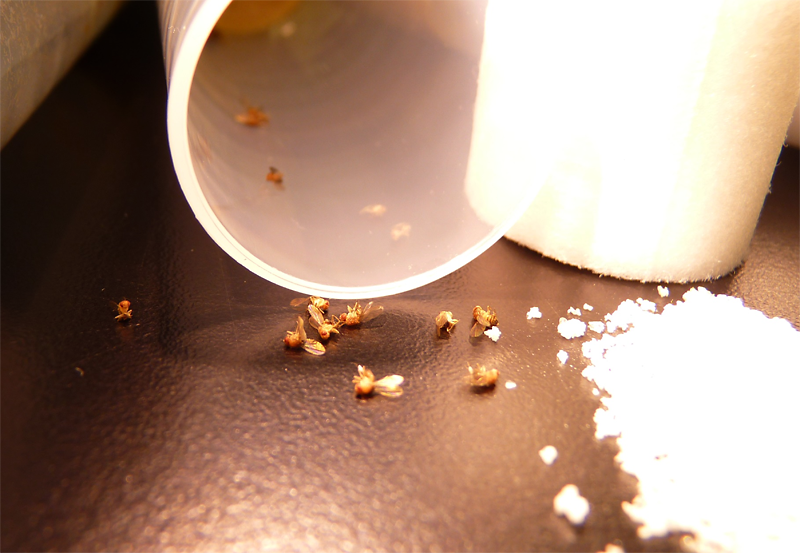
Erythritol, the main component of the sweetener Truvia®, was toxic to Drosophila melanogaster fruit flies in a dose-dependent manner in the Drexel team’s study, published in PLOS ONE. The flies consumed erythritol when sugar was available and even seemed to prefer it. No other sweeteners tested had these toxic effects.
Based on this discovery, Drexel and the researchers are pursuing a patent on erythritol as an insecticide and are continuing to study its effectiveness. (more…)
A new study from researchers at Drexel University adds evidence that using common antidepressant medications during pregnancy may contribute to a higher risk of autism spectrum disorders (ASD) in children, although this risk is still very small.
Results from past studies of prenatal use of selective serotonin reuptake inhibitors (SSRIs) and ASD risk have not been consistent. An ongoing challenge in this line of research is trying to tease apart potential effects of the medication on risk from the effects associated with the condition for which the medication was prescribed (most commonly depression). Based on past studies, both SSRIs and genetic factors associated with depression are likely associated with greater risk of ASD.
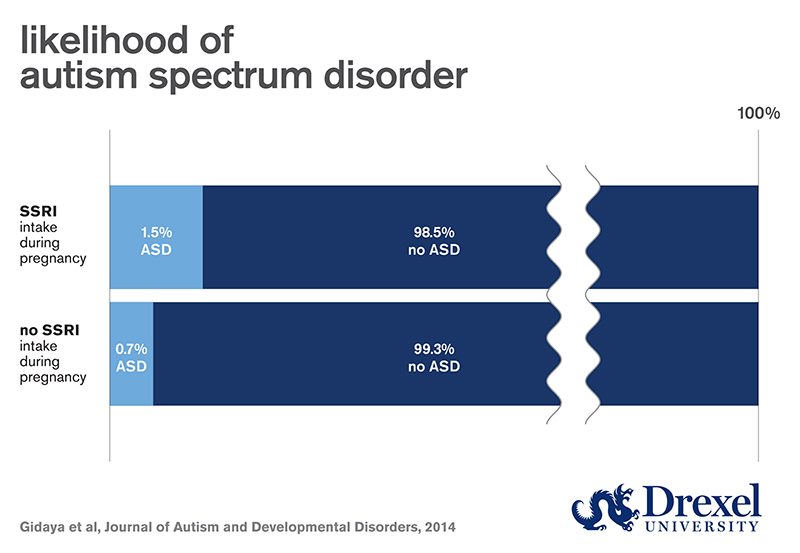
In the study, the Drexel team analyzed large population based registers of nearly 750,000 births in Denmark from 1997 through 2006. They found that about 1.5 percent of children born to women who had taken an SSRI during pregnancy were diagnosed with ASD, compared to about 0.7 percent of children born to an otherwise similar group of women not taking the medication.
“We found a two-fold increased risk for ASD associated with in utero exposure to SSRIs compared to the unexposed reference group” said lead author Nicole Gidaya, PhD. “More importantly, in our analysis we accounted for under-reporting of maternal depression in the register. This suggests that under-reporting of the confounder, maternal depression, may be a limitation in approaches previously used in the other studies.”
Gidaya, who performed this study while a doctoral student in the Drexel University School of Public Health, noted that “if the increased ASD risk we saw here is real, it is important to realize that the number of ASD cases that could be prevented by reducing SSRI exposure in pregnancy still represents only a small fraction of overall cases of ASD.”
The researchers further advised caution in interpreting the results in practice. Because of the challenges of distinguishing effects of medications from those of the condition indicating their use, more research in larger study populations will be needed to confirm the findings. In addition, the decision whether or not to use an SSRI in pregnancy is a complex one; pregnant women and their doctors need to consider women’s physical and mental health needs as well as other pregnancy-associated risks, including risks associated with untreated depression both during and after pregnancy.
However, the research team believes that the greater value of this finding is to direct further attention on understanding the mechanisms by which in utero SSRI exposure might influence the developing brain. Serotonin is a neurotransmitter whose use by the brain is altered during depression and modified by SSRI use, and has been shown to play an important role in brain development.
The authors of the current study point out that there is still a need for more population studies of possible associations between maternal SSRI use and autism, in light of the limitations of the present study and the conflicting results within the field’s previous studies of the question. They say future studies should use a large population sample where there is good quality data about exposure to medication, mental health diagnoses as well as ASD diagnoses.
“As we complete research in our attempts to understand autism’s causes we continue to realize that there are likely many genetic and non-genetic contributors,” said Craig Newschaffer, PhD, director of the A.J. Drexel Autism Institute and professor in Drexel’s School of Public Health, and the study’s senior author. “We must begin trying to map these multiple risk factors on to common pathways, so that these pathways can be a focus in our effort to prevent the impairment associated with ASD. Pathways involving the brain’s serotonin system are still one viable candidate.”
Gidaya performed this research with the support of funding from Drexel’s Office of International Programs which allowed her to travel to Denmark.








 Rachel Ewing